Quick Access
- Session 20
- Session 19
- Session 18
- Session 17
- Session 16
- Session 15
- Session 14
- Session 13
- Session 12
- Session 11
- Session 10
- Session 9
- Session 8
- Session 7
- Session 6
- Session 5
- Session 4
- Session 3
- Session 2
- Session 1
- Books
- Assignments
- Introduction
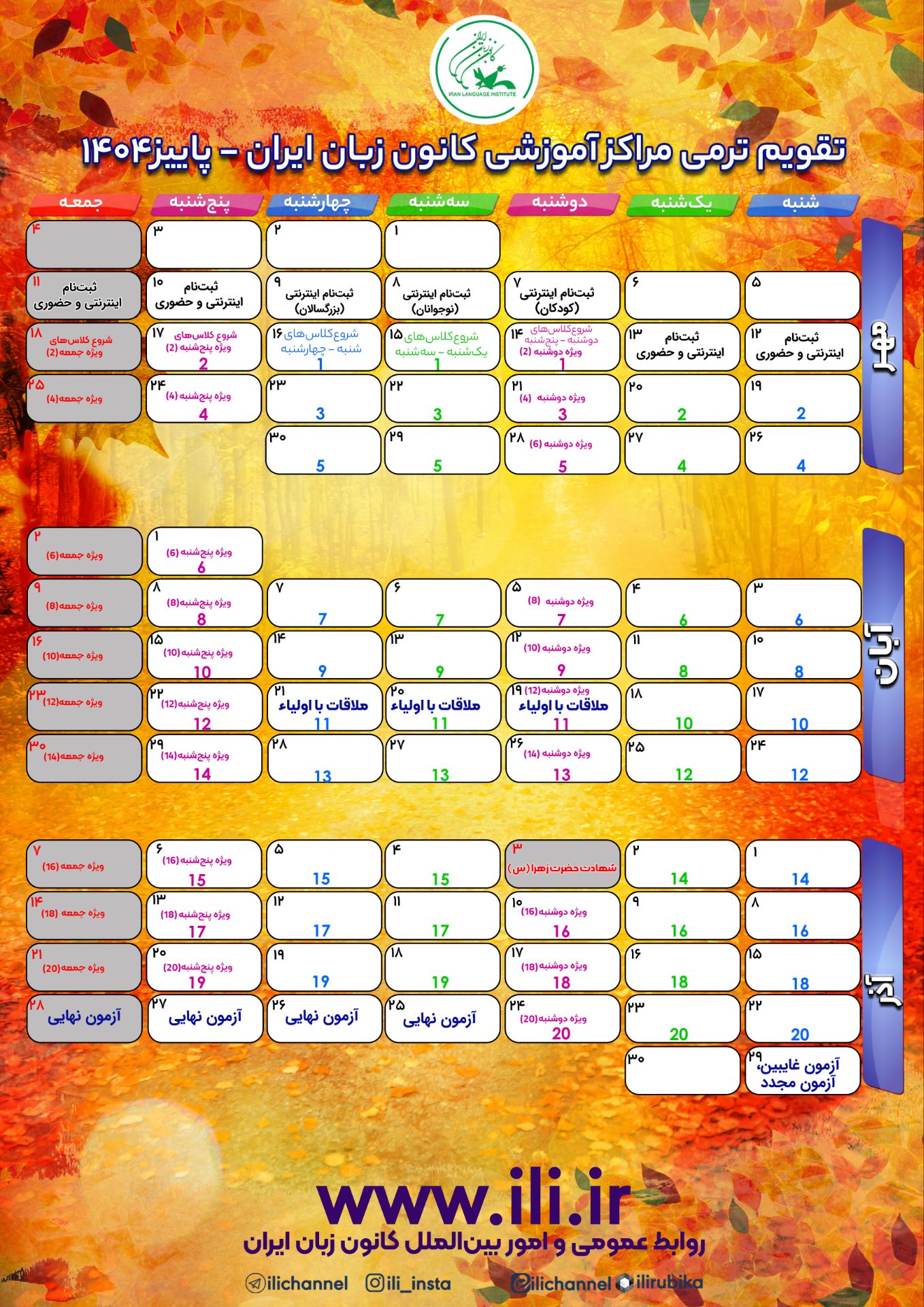
- Calendar
Session 20
UNIT 10: Student's Book
1. Possible Answers
- They hope it doesn't rain. / They hope it won't rain.
- They wish the rain would stop. / They wish it would stop raining.
- The man hopes the lady will marry him.
- He wishes she would change her mind.
- The basketball player wishes she hadn't broken her leg.
- She hopes she can play basketball again soon. / She hopes she'll be able to play basketball again soon.
2.
Part A
- If the doctor had arrived sooner, he might have been able to save the boy.
- If the boy hadn't been doing a man's job, he probably wouldn't have been killed.
- If the saw had cut the boy's finger instead of his hand, the boy could probably have survived.
- The boy might not have been cut by the saw if the sister hadn't said "Supped" at a crucial moment.
- If the work boss had said "Call it a day," the boy would have escaped his fate.
Part B
- The doctor probably wishes (that) he had arrived sooner.
- The boy’s parents probably wish (that) they hadn't allowed the boy to work at a man's job.
- Other parents probably hope (that) this kind of accident doesn't (or won't) happen to their children.
4.
June 4
Dear Diary,
This has been one of those days when I wish I had stayed in bed. It started at 7:30 this morning when Trudy called me up and asked me for "a little favor." She's always asking me to do things for her and never wants to take any responsibility for herself. She acts as if the world owed her a living. I wish she wouldn't do that. Today she wanted me to take her to the mall because she had to get her mother a birthday present. I told her I had to be downtown at ten A.M. for a job interview, and she said it wouldn't take long to drive to the mall and I'd have plenty of time to get downtown. I gave in and agreed to take her, but something told me I shouldn't. If I had listened to my inner voice, I might have a job today. When we were on the freeway, there was a major accident, and traffic was tied up for over an hour. By the time we got to the mall, it was ten-thirty, so I missed the interview. I think I probably would have gotten the job if I had managed to make it to the interview, because my qualifications are good. If only I hadn’t listened to Trudy! I just hope she never asks me to do something like this again, and if she does, I hope I don’t agree.
5.
- A
- B
- B
- A
- B
- A
- A
- B
- A
- A
6.
Answers will vary.
UNIT 10: Workbook
Vocabulary
A.
- D
- F
- E
- C
- B
- A
B.
- inkling
- Frowned
- half-heartedly
- Sweltering
- Merchandise
- accumulate
Grammar And Writing
C.
- we'd been able to
- we'd realized
- he keeps / he'll keep
- there's / there will be
- we could contact
- weren't
- we had
- this won't be / this isn't
- we knew
- it is / it will be
D.
- You look as though you've been unwell.
- I'd rather you didn't wipe your feet on the carpets.
- What if they don't accept your explanation?
- It's time we paid the bill.
- Suppose I complained to the police?
- They'd rather we went with them.
- She acts as if she were a member of the club.
- It's about time you called your parents.
Writing Note
E.
- Sentence No. 1
- and 7
- 9
- No
- Yes. Through the repetition of key words (guilty and innocent) and the use of transitions such as for example, after, whereas, etc.
Multiple-Choice Review
- D
- D
- A
- C
- B
- D
- B
- D
- D
- A
- B
- B
- B
- A
- C
Session 19
Unit 10 Grammar
Hope vs. Wish
- I hope that you can pass the final exam. ⇒ a real condition
I believe it is possible for my students to pass. - I wish that you could pass the final exam. ⇒ an unreal condition
I believe it is not possible for my students to pass.
Wish + The Verb to Be
- I wish (that) I was at home now. ⇒ temporarily impossible
Example: a student in a class - I wish (that) I were at home now. ⇒ absolutely impossible
Example: a prisoner sentenced to life imprisonment
As though / As if = انگار، گویا
Both "as though" and "as if" are used to compare something to a hypothetical situation. They often introduce a clause that describes how something seems or appears. In many contexts, they can be used interchangeably.
Situations at the Present Time
- The math teacher has written a difficult problem on the board.
- Tom behaves as if he knows the answer. ⇒ We believe he really knows the answer.
- Jack behaves as if he knew the answer. ⇒ We believe he doesn't know the answer. He is just pretending.
- It sounds as though you have a scar on your face. ⇒ We believe you really have a scar.
- It sounds as though you had a scar on your face. ⇒ We believe you don’t really have a scar; it only seems so.
Situations in the Past
- Yesterday the math teacher had written a difficult problem on the board.
- Tom behaved as if he knew the answer. ⇒ He really knew the answer.
- Jack behaved as if he had known the answer. ⇒ He didn't know the answer; he was pretending.
- He behaved as though nothing happened. ⇒ Nothing had really happened.
- He behaved as though nothing had happened. ⇒ Something had happened; he was pretending otherwise.
Unit 10: Reading
Intuition
It was a sweltering day. Thain and Aurora were driving down Maple Street, looking for a yard sale, when they spotted the old man. Waving at them with a halfhearted gesture, he looked as though he hadn't eaten for days.
"Nine-thirty in the morning, and it's already beastly hot. I wish I had an iced tea right now. Open your window, will you, Thain?"
"Wow! Look at that old man, Aurora. Boy, I'd sure get out of this heat if I were him.... Pull over, will you? Let's give him a ride. He's going to faint if he doesn't get out of the sun."
"Thain, I wish you would stop taking pity on every weirdo you see. He's probably an ax murderer. I bet he'll kill us and steal the car if we pick him up?"
"I don't think so. He looks harmless to me—just a poor old guy. He's acting as if he's sick."
"But Sweetie, we've got to get to that yard sale. There won’t be anything worth buying if we don't get there soon. If only no one buys that chest of drawers they advertised."
"My male intuition is telling me we'd better stop."
"If I had a nickel for all the times we've done things because of your male intuition, I'd be a rich woman. Aren't females supposed to have the intuition, anyway? OK. I just hope we don't end up in the newspaper headlines. I can see it all now: YOUNG MARRIED COUPLE MUTILATED BY SERIAL KILLER!"
They pulled up to the curb in front of the old man. "Need some help, sir?" Thain asked.
The old man smiled. "Yes, thank you. Could you take me to a pharmacy? I'm diabetic and I've run out of medicine. I'm on a trip around the country, but I keep forgetting to buy enough insulin. If I don't take my medicine regularly, I go into shock.... If only I weren't so forgetful."
They found a pharmacy and got the insulin. Back in the car, the old man said, "Now, if you can just take me to the bus station, I'll be on my way." Aurora frowned. Thain said, "Sure. We can do that." At the bus station, they helped the old man out of the car. "Can you tell me your names and your address? When I get back home, I'll send you a token of my appreciation." They gave him their names and address, said good-bye, and proceeded to the yard sale.
As Aurora had predicted, all of the good merchandise had been sold. "I wish we'd been able to get here in time to buy that chest of drawers," she said, "but I'm glad we stopped for the old guy. He did need our help. I'll be surprised if we ever hear from him, though. You don't really believe all that about his taking a trip around the country, do you, Thain?"
In a few days they had forgotten about the incident. Three months later they returned from a short vacation, and Aurora was going through the pile of mail that had accumulated in their absence. She opened a long envelope with no return address.
"What in the world? Thain, come here and look at this!" There was a letter inside, neatly typed, which said,
Dear Thain and Aurora,
I finished my trip around the country and had a marvelous time. I'm now back at home and won't be traveling anymore, I don't think. I met some wonderful people in my travels, the two of you among them. Thank you for your kindness to a forgetful old man. If you hadn't come along when you did and taken me to the pharmacy, I might have died. At the very least, I would have become quite ill. I wish there had been time for us to get to know one another. If I had been fortunate to have any children of my own, I couldn't have had any nicer ones than you two. At any rate, I am enclosing a token of my gratitude.
My warmest regards,
Quentin Wilkerson
Something fluttered out of a second sheet of folded paper. It was a check for fifty thousand dollars.
☕ No Homework for Next Session
Enjoy your free time!
Session 18
UNIT 9: Student's Book
1
- let
- got
- started
- were
- drove
2
- were she to have stayed
- otherwise
- with
- If so
- If not
- if she had stayed
- if she didn't find work
- if she had
- If they were hiring
- If they weren't hiring
3 - Suggested Answers
- Another man suggested (that) somebody turn off the fan.
- One man is insisting (that) they see The Atomic Mummy.
- A passerby recommends (that) they see Galaxy Wars.
- les time Amy learned how to change a tire.
- She'd rather they didn't go out tonight.
4
December 10
Dear April,
I wanted to write and fill you in on what's been happening since I left Ponders. I finally got a job!
Remember when you suggested I just go walking around, getting a sense of what Atlanta was like? A few weeks ago, I was really getting worried, and I had spent almost all the money I had saved up to tide me over until I found work. I had gotten to the point where it was absolutely essential that I find something or just come. So, I decided to follow your advice. Had I how known easy this would be, I would have tried it in the first week I was here. I started walking around in the downtown area, and before I knew it, I saw a beautiful little florist's shop. I walked right in as if I had courage and experience and asked whether they needed anyone. Can you believe that they did?
I was really happy in my job until my boss hired a new assistant manager who has been making my life miserable. He treats me as if I were his personal slave. I took this job to work with plants, not to serve him coffee. I think it's time I told him where I stand.
I have a few days off for the holidays. What if I came home as a surprise to Mom and Dad? Could we plan some kind of party? Write and let me know, OK?
Love, Helen
5 - Listening 1
Part A
- five times
- 10:00 P.M.
- If you'd known she was going to call / Had you known she was going to call
- She said she couldn't afford it.
- be manipulated again
- You're boiling inside.
- Lionhearts
- You'll get your money back.
Part B
- asked that you baby-sit her children
- had you known
- insist that she come and pick up her kids
- suggested that Mary look into day care
- treats you as if you were her slave
- if so
- with a little bit of practice
Listening 2
- T
- F
- F
- T
- F
- T
- T
- F
- T
- F
- F
6
Answers will vary.
Unit 9: Workbook
A.
| Verb | Noun | Adjective | Adverb |
|---|---|---|---|
| assert | assersion | assertive | assertively |
| intrude | intruder, intrusion | intrusive | intrusively |
| compel | *** | compelling | compellingly |
| urge | urgency | urgent | urgently |
| insist | insistence | insistent | insistently |
| embarrass | embarrassment | embarrassing | embarrassingly |
B.
- compellingly
- insistent
- assersion
- embarrassed
- intruder
- urgently
Grammar And Writing
C.
- that a driver keep to the right-hand side of the road
- that he or she drive on the left
- that people remove their shoes before going inside a house
- that people not eat pork products
- that a sick person take vitamin C.
- that a sick person have a lot of homemade chicken soup
- that a waiter not be summoned by whistling
- that a waiter be summoned by whistling
D.
- we wouldn't be able to open cans
- we would have to use our fingers to eat
- not been discovered, we wouldn't have had electric lights, movies, television, and computers
- existed in the last century, people would have traveled extensively then
- not available throughout the world, fashions, music, and basic values wouldn't be very similar in many places
- not been developed, businesses wouldn't be able to obtain the data they need to function in today's competitive world
- the general public wouldn't have easy access to extensive knowledge
E.
- Descending order. It starts with the chief reason.
- Ascending order. It ends with the most important item.
Multiple-Choice Review
- B
- B
- A
- D
- C
- C
- D
- A
- C
- C
- C
- A
- B
- D
- B
Make-Up Class
Day: Monday
Date: Azar 17
Time: 8:30 pm - 10:00 pm
Homework
Exercises of the Student's Book & Workbook in Unit 9
Summary of the Reading in Unit 9
Session 17
Unit 9 Grammar
The Subjunctive Form of the Verb
• The Base Form of the Verb as the Subjunctive Verb
• Adjective of Urgency + That-Clause
- It is necessary that you be on time.
- It is essential that he study hard.
- It was important that we not waste our time.
Adjectives of Urgency: necessary, urgent, important, desirable, essential, vital, ...
• Verb of Urgency + That-Clause
- The teacher recommended (that) Tom be more active in the class.
- The IMF, the International Monetary Fund, demands (that) Lebanon carry out economic reforms before applying for a loan.
- Mr. Tomlinson insists (that) his son not sell his house.
Verbs of Urgency: insist, recommend, suggest, ask, require, demand, ...
• The Past Form of the Verb as the Subjunctive Verb
• would rather + That-Clause
- I'd rather (that) you didn't smoke in here.
- The customer would rather (that) the waiter served him some soup as an appetizer.
• It's (high/about) time + That-Clause
- It's time (that) we went home. = (It's time to go home.)
- It's high time (that) the Central Bank of Iran controlled the inflation.
- It’s about time (that) you invested your money intelligently.
Inversion of If-Clauses
Inversion = Changing the word order
Type I
- If you study, you will pass.
(If you should study, you will pass.)
Should you study, you will pass. - If it doesn’t rain, we will go on a picnic.
(If it should not rain, we will go on a picnic.)
Should it not rain, we will go on a picnic.
Type II
- If I were a bird, I could fly.
Were I a bird, I could fly. - If he weren’t ready, he wouldn’t be here.
Were he not ready, he wouldn’t be here. - If you studied, you would pass.
• be to do sth = قرار بودن که کاری را انجام دادن
If you studied = If you were to study
If you were to study, you would pass.
Were you to study, you would pass. - If you didn’t study, you would fail.
• If you didn’t study = If you weren’t to study
Were you not to study, you would fail.
Type III
- If you had studied, you would have passed.
Had you studied, you would have passed. - If you hadn’t studied, you would have failed.
Had you not studied, you would have failed.
Implied Conditionals
implied = indirect, implicit
Implied Conditional: an expression which has been used instead of an if-clause or the main clause of a conditional sentence.
Examples
- You should meet the deadline. If you don't meet the deadline, you will be fined.
- You should meet the deadline. Otherwise, you will be fined.
otherwise = if not so - What would happen if I didn't attend the meeting?
- What if I didn't attend the meeting?
Unit 9: Writing
Emphatic Order in a Paragraph
Ascending Order
This means arranging your points, examples, or arguments from the smallest, simplest, or least significant to the largest, most complex, or most significant. Imagine climbing a staircase: each step gets higher and higher until you reach the top. For example, in a paragraph about favorite books, you might start with your least favorite and build up to your most favorite. This creates suspense and a climax at the end.
Example:
Many people choose to study late at night for several reasons. At first, it may simply be because the environment is quieter, with fewer distractions around. A stronger reason is that late hours often allow for uninterrupted focus, as social obligations and daily tasks have already ended. More importantly, the brain tends to process creative ideas better during calm, solitary moments, making night study sessions more productive. Ultimately, the most significant reason is that individuals can align these hours with their personal peak concentration times, ensuring maximum efficiency and deeper learning.
Descending Order
This is the opposite, arranging your points from the largest, most complex, or most significant to the smallest, simplest, or least significant. It's like walking down a staircase: each step gets lower and lower until you reach the bottom. For example, in a paragraph about recent achievements, you might start with the most impressive one and then list others in decreasing importance. This grabs attention right at the start and leaves the reader with a solid, comprehensive understanding.
Example:
Many people choose to study late at night primarily because they can align these hours with their personal peak concentration times, ensuring maximum efficiency and deeper learning. Another strong reason is that the brain often processes creative ideas better during calm, solitary moments, making night study sessions especially productive. A less significant but still valuable factor is that late hours provide uninterrupted focus, since social obligations and daily tasks have already ended. Finally, the simplest reason is that the environment is quieter, with fewer distractions around.
Unit 9: Reading
☕ No Homework for Next Session
Enjoy your free time!
Session 16
UNIT 8: Student's Book
Exercise 1
- Example
- Subjects: Reg, he.
Weighing the gravity of the situation, Reg considered whether to stop or speed away. - Subjects: they, they.
Stopping, they risked a potentially deadly confrontation with criminals. - Subjects: Reg, he.
Seeing a police car parked on the shoulder, Reg pulled over to alert the authorities. - Subjects: Nicholas, Reg and Maggie.
Cannot be combined. - Subjects: thugs, They.
TWO Calabrian thugs killed Nicholas, thinking the Greens were jewelers carrying precious stones.
Exercise 2
- Example
- He was trying to earn money by selling guidebooks.
- Not having any money, the tourists were unable to buy a guidebook.
- Impressed by the boy, they decided to buy a guidebook anyway.
- They went to a bank to change some money.
- Having gotten some money and returned to the station, they couldn't find the boy.
- After asking a policeman, they found out where he was.
- Having found the boy again, they were able to buy a guidebook.
Exercise 3
A HELPING HAND
by Jim Lamoreux
If you are at all like me, you tire of requests to help others. Barraged by seemingly constant appeals for money to support public television, the Policemen's Benevolent Association, or the Special Olympics, worthy organizations all, I tend to tune out, my brain numbed. It's not that I'm selfish, I don't think. It's just that there are so many of these requests. Subjected to many stimuli, I only remember the crucial ones. By arguing to myself that I don’t have enough money to help others, I am able to ignore the request.
At least that was the way I saw the situation until the magazine I write for sent me to a small village in South America to do a human-interest story on homeless children. Having seen and heard many television requests asking viewers to sponsor a child overseas, I had always said to myself, "I'll bet the money gets pocketed by some local politician." My opinion changed when I saw the reality of the life of a poor child. Having landed in Santa Simona, I took a taxi to my hotel in the center of town, and that’s where I met Elena. Sitting on a dirty blanket on the sidewalk in front of the hotel, she caught my eye. She didn't beg. Instead, she was trying to scratch out a living by selling mangoes. Smiling up at me, she asked, "Mangos, sir?" I bought some mangoes and some other fruit, and we got to talking. Her parents were both dead, and she lived with an elderly great-aunt who had no job and sold firewood for money. I learned from her aunt that Elena had suffered from polio at the age of five and now walked with a distinct limp.
While talking later with a nun at a nearby convent that administers gift money I got from other countries; I got a lot of worthwhile information. She proved to my satisfaction that money from sponsors does indeed get to those who need it. Learning that I could sponsor Elena for less than a dollar a day, I began to feel ashamed. After all, I spend more than that on my dogs. But what remains most vivid in my mind is my vision of Elena. She didn't beg, and she didn't feel sorry for herself. Selling her mangoes, Elena earned a semblance of a living and her spirit shone through in the process. So, I say to you reading this: The next time you hear an ad about sponsoring a child, pay attention.
Exercise 4
- Example
- Having been told that vitamin C, vitamin E, and beta-carotene greatly reduce cancer risk, people began buying these nutrients in large quantities.
- Having been informed that taking one aspirin a day lowers the chances of having a heart attack, people began taking aspirin.
- Having learned that one glass of wine per day has a beneficial effect on the heart and circulatory system, many people now drink wine for medicinal reasons.
- Hoping to lower their cholesterol levels, people minimize their intake of animal fats.
- Knowing that roughage in the diet is excellent for digestion, people are consuming more fresh fruit, vegetables, and whole wheat products.
- Believing that eating a lot of fish will raise their intelligence level, some people eat a lot of fish.
- Having known for a long time that too much salt and sugar is unhealthful, people buy a lot of salt-free and sugar-free products.
- Realizing that they can contribute to their own good health, people eat much more knowledgeably than they used to.
Exercise 5
- The cease fire has been broken.
- Amalde declined to commit himself.
- Success depends on good-faith actions of Mr. Tintor, the country’s president.
- Mr. Tintor can demonstrate good faith by agreeing to free and unconditional talks.
- The aide was interviewed on the basis of anonymity.
- One of the key issues is the return of the 40,000 refugees displaced by the war.
- They have acknowledged that the current AIDS vaccine is ineffective.
- WASA has conducted successful repairs and identified flaws.
- The new telescope will cost a billion dollars.
- The new nation will need massive infusions of foreign aid in order to be a viable state.
Exercise 6
Answers will vary.
UNIT 8: Workbook
Vocabulary
A.
- 1 D
- 2 F
- 3 A
- 4 E
- 5 C
- 6 B
B.
- 1 limp
- 2 viable
- 3 dawned
- 4 oozed
- 5 donate
- 6 intake
Grammar And Writing
C.
- 1 preparing
- 2 feeling
- 3 As
- 4 commenting
- 5 after / when
- 6 hearing
- 7 who
- 8 when / after
- 9 knowing
- 10 announcing
D.
- Built by Shah Jahan in the seventeenth century as a mausoleum for his wife, the Taj Mahal in Agra, India, is considered by many to be the most beautiful building in the world.
- Rising 1,250 feet, the Empire State Building in New York City is one of the highest buildings in the world and a top tourist attraction.
- Completed in 1914, the Panama Canal allows ships to pass between the Atlantic and Pacific Oceans without having to make the long journey around Cape Horn.
- Extending over 1,500 miles, the Great Wall of China, which was begun in the third century B.C., was not completed until more than a thousand years later.
- Hoping to control floods, and supply electricity, Egypt, with Soviet assistance, built the huge Aswan High Dam between 1960 and 1970.
- Completed by the Emperor Titus in 80 A. D., the Coliseum in Rome was used for gladiatorial contests and wild beast displays.
- Derided by many when it was finished in 1889, the Eiffel Tower has become a beloved symbol of Paris.
- Installed in 1856, the bell in the great clock tower of the Houses of Parliament in London was named "Big Ben" for Sir Benjamin Hall, commissioner of works.
Writing Note
E.
- An Olympic athlete must be strong both physically and mentally. First of all, if he or she hopes to compete in an Olympic sport, he or she must be physically strong. Furthermore, an aspiring Olympian must train rigorously for many years. For the most demanding sports, he or she trains several hours a day, five or six days a week, for ten or more years. In addition to being physically strong, he or she must be mentally tough. This means that he or she has to be totally dedicated to his or her sport, often giving up a normal school, family and social life. Being mentally strong also means that he or she must be able to withstand the intense pressure of international competition with its attendant media coverage. Finally, not everyone can win a medal, so he or she must possess the inner strength to live with defeat.
- English has almost become an international language. Except for Chinese, more people speak English than any other language. Spanish is the official language of more countries in the world, but more countries have English as their official or unofficial second language. More than seventy percent of the world's mail is written in English. In international business, English is used more than any other language, and it is the language of airline pilots and air traffic controllers all over the world. Moreover, although French used to be the language of diplomacy, English has displaced it throughout the world. Therefore, unless you plan to spend your life alone on a desert island in the middle of the Pacific Ocean, English is a useful language to know.
Multiple-Choice Review
- 1 B
- 2 C
- 3 A
- 4 D
- 5 D
- 6 A
- 7 D
- 8 C
- 9 B
- 10 D
- 11 A
- 12 B
- 13 A
- 14 A
- 15 C
Homework
Exercises of the Student's Book & Workbook in Unit 8
Summary of the Reading in Unit 8
Session 15
Unit 8 Grammar
Adverb Phrases = Adverbial Phrases
Present Participle = Verb + ing
- Playing soccer, Tom injured his ankle.
Playing soccer = While he was playing soccer - Listening to music, I forgot all my problems.
Listening to music = While I was listening to music
Conjunction / Preposition + Present Participle
- While playing soccer, Tom injured his ankle.
- After filling out the form, I submitted it to the secretary.
- Robert usually meditates by listening to oriental music.
Having + Past Participle
- Having played soccer for 90 minutes, most of the players felt exhausted.
Having played soccer… = After playing soccer… - Having filled out the form, I submitted it to the secretary.
Having filled out… = After filling out…
Past Participle
- Carried away to the wonderland of music, I forgot all my problems.
Carried away… = Having been carried away… - Hospitalized for two months, the patient fully recovered from his condition.
Hospitalized… = Having been hospitalized…
Infinitive of Purpose = (in order) to + Simple Form of the Verb
- Robert usually listens to oriental music (in order) to meditate.
- Sally avoided arguing with her father (in order) not to offend him.
Dangling Adverb Phrases
dangling = not fixed, hanging, suspended
Point:
Whenever the implied subject of the adverb phrase is different from the subject of the sentence, the sentence is grammatically wrong and the adverb phrase is described as a dangling modifier.
Solution:
We should edit and revise the sentence in such a way that two subjects become the same. One useful method is making either the main part of the sentence or the adverbial phrase passive.
Examples:
Wrong: Having scored a very beautiful goal, the spectators applauded Lionel Messi for about ten minutes.
The Implied Subject of the Adverb Phrase ⇒ Lionel Messi
The Subject of the Sentence ⇒ the Spectators
Right: Having scored a beautiful goal, Lionel Messi was applauded by the spectators for about ten minutes.
The Implied Subject of the Adverb Phrase ⇒ Lionel Messi
The Subject of the Sentence ⇒ Lionel Messi
Wrong: Having arrived in the city, a taxi took me to my hotel.
The Implied Subject of the Adverb Phrase ⇒ I
The Subject of the Sentence ⇒ a taxi
Right: Having arrived in the city, I was taken to my hotel by a taxi.
The Implied Subject of the Adverb Phrase ⇒ I
The Subject of the Sentence ⇒ I
Unit 8: Writing
Coherence with Pronouns
The correct use of pronouns can make a paragraph look more coherent because of the following reasons:
- Pronoun Reference: When you use pronouns to refer back to nouns mentioned earlier, you create a smooth flow. For example, if you start with "Sarah loves cats," followed by "She has three," the sentence maintains its coherence.
- Avoiding Repetition: Pronouns prevent your paragraph from sounding redundant. Instead of repeating "the book" every time, switch to "it" after the initial mention.
- Clarifying Relationships: Pronouns help clarify relationships between ideas.
- Maintaining Focus: By using pronouns consistently, you keep the focus on your main subject without distractions. It keeps the reader's attention anchored to the core idea.
Incoherent Paragraph
"David and his brother went to the park. He played soccer while he watched. When he got tired, he went to get ice cream, and he was happy. Then, he left to go home."
The incorrect use of pronouns makes it unclear who is doing what.
Coherent Paragraph
"David and his brother went to the park. David played soccer while his brother watched. When David got tired, he went to get ice cream, and his brother was happy. Then, they left to go home."
Unit 8: Reading
☕ No Homework for Next Session
Enjoy your free time!
Session 14
UNIT 7: Student's Book
1. Possible Answers
- if she makes the basket
- unless she misses the basket
- Even though (Although / Though) the Blues aren't going to win
- than there are in the audience
- as there are in the game
- so ... that the competition was / had to be canceled.
2. Possible Answers
- The first adverb clause: As some of the best ... While could replace as.
- The Quiksilver invitational surfing competition had to be canceled because the waves were just too big.
- Big-wave rider Greg Russ had to be physically restrained by lifeguards because the waves were 40 feet high.
- You'll get $50,000 from the surf-equipment manufacturer if you can ride the biggest wave of the year and get it on film.
- More people are becoming extreme athletes and putting their lives in danger because they want to experience the ultimate rush, earn large prizes, and face big challenges.
- The adverb clause: Although exact figures on how many extreme athletes exist are hard to come by ... Though or even though could replace although.
- The first adverb clause: ... when I started doing rescues 20 years ago.
- The second adverb clause: ... because nobody goes there. The sentence would not make sense.
- The third adverb clause: ... because nobody goes there. Because could be replaced by since.
- (Because) Denali National Park's mandatory $150 fee for climbers seeking to ascend Mt. McKinley has funded an educational program, the number of search-and-rescue missions and fatalities has been reduced.
3. Reading Passage
Why Sports? By Jamal Jefferson
A lot of people are criticizing school sports these days. Some say there's too much emphasis on football and basketball and not enough on education. Others say the idea of the scholar—athlete is a joke. Still others say sports are a way of encouraging violence. I think they're all wrong. If anything, school sports help prevent violence, not encourage it. Fortunately, most of the heads of high schools and colleges haven't accepted this concept. Why do I think sports are a positive force?
For one thing, sports are positive because they give students opportunities to be involved in something. Every day on TV we hear that violence is increasing. I think a lot of people get involved in crime because they don't have enough to do to keep themselves busy. After you've played two or three hours of basketball, baseball, or any other kind of sport, you're so tired that it's hard to commit a violent act.
Second, sports teach people a lot of worthwhile things, especially at the high school level. By playing on a team, students learn to get along and work with others. When their team wins, they learn how to be good winners; when their team loses, they find out they have to struggle to improve. They discover that winning a few and losing a few are part of the normal ups and downs of life. Also, there's no doubt that students improve their physical condition by participating in sports.
Finally, sports are positive because they give students who do not have enough money to go to college an opportunity to get a sports scholarship and improve their chances for a successful life. If a young basketball player from a small village in Nigeria can get a scholarship to play for, say, UCLA, he will have a chance to get an education and probably make his life better. If a young woman with little money is accepted on the University of Toronto swim team and gets a scholarship, she'll have the chance to earn a college degree and go on to a high-paying job.
Although school sporting programs have some deficiencies that need to be ironed out, their benefits outweigh their disadvantages. I should know because I'm one of those students. School sports must stay.
4. Sentence Transformations
-
When we turn to certain sports channels on TV, we see athletes jumping, diving, somersaulting over dangerous landscapes, and otherwise contorting themselves.
OR
We see athletes jumping, diving, somersaulting over dangerous landscapes, and otherwise contorting themselves when we turn to certain sports channels on TV. -
On account of the fact that these athletes push themselves to extreme and dangerous levels, this category of "sports" is called "extreme sports."
OR
This category of "sports" is called "extreme sports" on account of the fact that these athletes push themselves to extreme and dangerous levels. -
In spite of the fact that extreme sports are dangerous, they are becoming more and more popular among young people all over the world.
OR
They (extreme sports) are becoming more and more popular among young people all over the world in spite of the fact that they (extreme sports) are dangerous. - However, these sports are so extreme and dangerous that many people think they should not be encouraged.
-
Although extreme sports are not seen at the Olympic Games yet, there are twice-yearly competitive games showing extreme sports on some sports channels.
OR
There are twice-yearly competitive games showing extreme sports on some sports channels, although extreme sports are not seen at the Olympic Games yet.
OR
Although there are twice-yearly competitive games showing extreme sports on some sports channels, extreme sports are not seen at the Olympic Games yet.
OR
Extreme sports are not seen at the Olympic Games yet, although there are twice-yearly competitive games showing extreme sports on some sports channels. -
Because "X" represents the word "extreme," these games are called "The X-Games."
OR
These games are called "The X-Games" because "X" represents the word "extreme." -
Since they first appeared on television in 1995, they have been increasingly popular.
OR
They have been increasingly popular since they first appeared on television in 1995. - In the 1999 Summer X-Games, there were many more different kinds of competition than there were in the 1995 games.
-
Wherever there are young people who want to compete in "real adventure," there will be more and more participants in extreme sports.
OR
There will be more and more participants in extreme sports wherever there are young people who want to compete in "real adventure."
5. Possible Answers
- She became successful because her parents loved and supported her.
- She learned to swim in the Caribbean when she was four years old and living in Jamaica.
- They spent a lot of time at the beach because they didn't have a lot of toys, video games, and similar things.
- It was more difficult to swim in the Caribbean than it was in a pool.
- They agreed to pay for lessons if she would stick to her swimming and practice daily.
- She didn't have as much time to have fun and be a kid as her friends did.
- She can't imagine herself doing anything else because swimming is such a passion for her.
6. Answers
Answers will vary.
Workbook: Unit 7
Vocabulary
A.
- Unleashed
- mandatory
- virtually
- ultimate
- summit
- incentive
B.
-
enthusing
enthusiasm
enthusiasts -
globalize
globally
global -
moderately
moderation
moderator -
margin
marginally
marginalizes -
fatally
fatalities
fatal -
coordination
coordinator
coordinate
Grammar and Writing
C.
- Even though
- because / since
- Because / Since / As
- though
- as
- while
- because / since / as
- Because
D.
- such ... I'm going to have to get rid of it
- so ... he began to shout at the desk clerk
- so ... he could barely walk
- so ... everyone in the office heard me
- such ... he needs to consult a doctor
- so ... I couldn't help crying for a while
- so ... She had to give up thinking about it
- such ... she can't leave it home even for one day
Writing Note
E.
No one was surprised at Jesse Owens's success in the 1936 Olympics because he had done something even more remarkable a year earlier. When he competed in the Big Ten Championship on May 25, 1935, he had the greatest day in the history of modern track competition. He didn't think he would even be able to participate because he had strained his back a few weeks earlier. Although he could not even jog at the warm-up before the meet, he decided to compete in the 100-yard dash. Once he got off to a perfect start, he finished the dash in 9.4 seconds, matching the world record. While his coach had advised Owens to take only a single long jump, he leaped almost 27 feet and beat the world record by nearly a half-foot. Owens also won the 200-yard dash in 20.3 seconds; thus, he set another world record. Besides, he finished the 220-yard low hurdles in 22.6 seconds, and broke an 11-year-old world record.
Multiple-Choice Review
- a
- c
- c
- b
- d
- c
- a
- a
- d
- c
- a
- d
- b
- d
- a
Homework
Exercises of the Student's Book & Workbook in Unit 7
Summary of the Reading in Unit 7
Session 13
Unit 7 Grammar
Adverb Clauses = Adverbial Clauses
Adverb Clauses of Reason
We use the conjunctions because, as, or since in adverb clauses of reason.
- because = زیرا، چون
- as = since = از آنجایی که
Examples:
- Since it was too cold, everybody was wearing a coat.
- Everybody was wearing a coat because it was too cold.
- As Michael was busy, he couldn't go to work.
- Michael couldn’t go to work because he was busy.
- As Sally felt tired, she took a nap.
- Sally took a nap because she felt tired.
Points:
- In colloquial English, because is sometimes abbreviated into ’cause.
- If the adverb clause is at the beginning of the sentence, use a comma. If at the end, no comma is needed.
Adverb Clauses of Contrast
Adverb clauses of contrast begin with although, even though, or though.
- although = even though = though = اگر چه، هر چند
Examples:
- Though Michael is a rich man, he doesn’t waste his money and economizes a lot.
- Sally decided to become a mathematician even though her parents were against her decision.
Points:
- After an adverbial clause of contrast, don’t use but.
- “Though” is mostly used in conversational English. “Although” and “even though” are more formal.
- We can use in spite of the fact that or despite the fact that = although.
Example: Sally decided to become a mathematician despite the fact that her parents were against her decision.
Adverb Clauses of Condition = If-Clauses
Adverb clauses of condition start with if or unless.
- if = provided that = اگر
- unless = if not = مگر
Point: When the clause begins with unless, use a positive verb even though the meaning is negative.
Correct: The meeting will be called off tomorrow unless the weather conditions are favorable.
Meaning: if the weather conditions aren’t favorable.
Adverb Clauses of Time
Adverb clauses of time begin with when, whenever, as soon as, since, etc.
- I loved history when I was at school.
- The roof leaks whenever it rains.
- Tom bought a small apartment as soon as he got a loan from the bank.
- Cathy hasn't phoned since she went to Berlin.
Adverb Clauses of Place
Adverb clauses of place begin with where or wherever.
- Sit where I can see you.
- We will camp out wherever we find a river.
Adverb Clauses of Comparison
Adverb clauses of comparison begin with than and follow comparative adjectives or adverbs.
- The house which I bought is bigger than the one which you bought.
- It was much better than I'd expected.
Adverb Clauses of Result
Adverb clauses of result start with that, but we need such or so in the main clause.
- such + Noun Phrase
- so + Adjective/Adverb
Examples:
- Mr. Williams is such a rich man that he can buy a penthouse in Manhattan.
- Mr. Williams is so rich that he can buy a penthouse in Manhattan.
- Andrew is investing his money so wisely that he will become a millionaire in five years.
- This issue was of such importance that we could not afford to ignore it.
- This issue was so important that we could not afford to ignore it.
Note: could not afford to = were not able to
Unit 7: Writing
Coherence
Definition: Coherence in a paragraph means that all the sentences are logically connected and work together to support a single idea or topic. A coherent paragraph allows the reader to easily follow the writer’s train of thought without confusion.
Key Elements of Coherence
- Clear Topic Sentence: States the main idea and guides the rest of the paragraph.
- Logical Order: Ideas are arranged in a logical sequence (chronological, spatial, or importance).
- Transitions: Use words like "firstly," "in addition," "however," "therefore" to link sentences.
- Consistent Point of View: Maintain the same subject or focus throughout the paragraph.
- Repetition of Key Words or Phrases: Reinforces the main idea and keeps the paragraph unified.
Example of an Incoherent Paragraph
The cat slept on the mat. The sun was shining brightly. I had a sandwich for lunch. I love reading books about history. Dogs are loyal animals.
Example of a Coherent Paragraph
The cat slept on the mat, basking in the bright sunlight. After having a sandwich for lunch, I decided to read a book about history. As I read, my loyal dog lay by my side.
How Coherence Was Achieved
- Logical Order: Sentences flow naturally, creating a clear and organized narrative.
- Transitions: Phrases like "basking in the bright sunlight" and "after having a sandwich for lunch" connect ideas smoothly.
- Consistent Point of View: Focus remains on the narrator’s activities and experiences.
- Repetition of Key Words: Words such as "slept," "sunlight," "sandwich," and "book" reinforce the main idea.
By applying these elements, the coherent paragraph becomes more engaging and easier for the reader to understand.
Unit 7: Reading
Unit 7: Reading Passage
Going to Extremes?
The passage introduces the concept of extreme sports through the example of bungee jumping. A group of people prepare on a bridge, attaching elastic cords to their harnesses before jumping off, demonstrating the thrill and danger of such activities.
Main Ideas
- Sports and Human Spirit: Since the first Olympic Games in 776 B.C., sports have challenged and entertained people.
- Rise of Extreme Sports: In the last 10–20 years, new sports have emerged that push participants to dangerous limits.
- Motivation: Extreme athletes, like Mark Musgrave, emphasize attitude, individuality, and freedom from rules as reasons for participation.
- Examples: Windsurfing with flips, mountain biking down steep rocky paths, skiing off cliffs, sky surfing, and in-line skating.
- Debate: While some argue these sports are too dangerous, others see them as personal choices and a way to seek unique experiences in a globalized world.
Key Vocabulary
- Bungee jumping: Jumping from a high place with an elastic cord attached.
- Extreme sports: Sports involving high risk and pushing physical limits.
- Attitude: A person’s mindset or approach to challenges.
- Homogenized world: A world where experiences and places feel the same everywhere.
- Counterrevolution: A reaction against sameness, seeking individuality.
Summary
Extreme sports such as bungee jumping, mountain biking, and sky surfing have grown in popularity because they offer challenge, individuality, and freedom. Athletes like Mark Musgrave highlight that these sports are not about mass participation but about personal attitude and unique experiences. In a globalized world where sameness dominates, extreme sports provide a way for people to reclaim individuality and excitement, even if the risks are high.
☕ No Homework for Next Session
Enjoy your free time!
Session 12
UNIT 6: Student's Book
1
- which I find somewhat amazing
- which bothers me
- which is what everyone likes about him
- which is mystifying
2
- which is why
- the other prisoners looked up to
- he's been working for
- the psychiatrists considered
- which is why
- who has been in trouble
- a fact which / that makes me
- whom the other prisoners respected
- for which he has been working
- whom the psychiatrists considered
- evidence which / that makes me
3
- who(m) ... stayed
- when ... was
- which had
- which OR that ... wanted
- where ... were
- who(m) ... take care of
- which ... put
- which OR that ... find
4
Dear Mom and Dad,
September 28
Well, the first week of college has been hectic but it's turned out OK. My advisor is a lady who is also from Winnipeg, so we had something we could talk about. Since I haven't decided on a major, she had me take one of those tests that show you what you're most interested in. She also had me do one of those personality inventories that tell you what kind of person you are.
According to these tests, I'm a person who is an extrovert. I also found out that I'm most interested in things that involve being on the stage and performing in some way, which doesn't surprise me a bit. I always liked being in school plays, remember? I signed up for two drama courses. Classes start on Wednesday, and I'm getting to know the other guys who live in my dormitory. It’s pretty exciting being here. Not much else. I’ll call in a week or so.
Love,
Al
5
- both of whom are thinkers
- neither of whom is extroverted
- both of whom are feelers
- one of whom is a perceiver
- all of whom are good examples of extroverts
6
Listening 1
- A
- B
- B
- A
- B
Listening 2
- A
- B
- A
- B
- B
- A
7
Answers will vary.
UNIT 6: Workbook
Vocabulary
A.
- discussion
- murder
- complaint
- marriage
- proposal
- Issue
B.
-
- a. perceptible
- b. perception
- c. perceptive
-
- a. validity
- b. validated
- c. validly
-
- a. restricted
- b. restriction
- c. restrictive
-
- a. introverted
- b. introvert
- c. introversion
-
- a. correlative
- b. correlates
- c. correlation
-
- a. mystifying
- b. mystifies
- c. mystification
C.
- c
- e
- g
- h
- a
- f
- b
- d
D.
- most of which comes from processed food
- most of which could have been avoided
- half of which are longer than 40 days
- 71 percent of whom think people in power take advantage of others
- 14 percent of whom achieve scores of over 130 on IQ tests
- more than half of whom are under 64 years of age
- all of which yield more nutrients when lightly cooked than when raw
- much of which is junk food
Writing Note
E.
-
- a. In fact, house construction in different parts of the world is related to the building materials that are available.
- b. In conclusion, depending on their availability, different building materials such as snow and ice, mud or clay, wood or tough, fibrous plants are used for house construction.
-
- a. Finally, if you drive carefully and keep your car well, the gas consumption in your car can be reduced.
- b. To sum up, you can decrease gas consumption in your car by not speeding, avoiding fast stops and starts, checking your tire pressure, and getting your tune-up regularly.
Multiple-Choice Review
- a
- d
- c
- a
- b
- d
- b
- c
- a
- a
- a
- c
- a
- a
- c
Homework
- Summary of the Reading in Unit 6
- Exercises of the Student's Book and Workbook in Unit 6
Session 11
Unit 6 Grammar: Adjective Clauses
Classification of Adjective Clauses Based on the Function of the Relative Pronoun
Relative Pronoun = Conjunction (WH words such as who, what, which, how, where, when and the conjunction "that")
Relative Pronoun as the Subject of the Adjective Clause
People: He is the man who lives next door. / He is the man that lives next door.
Things: This is the photo which shows my house. / This is the photo that shows my house.
Possession: He is the man whose car was stolen.
Relative Pronoun as the Object of the Adjective Clause
People: He is the man who(m) I met. / He is the man that I met. / He is the man ∅ I met.
Things: This is the photo which I took. / This is the photo that I took. / This is the photo ∅ I took.
Possession: It was an agreement the details of which could not be changed. (= of which the details could not be changed)
Relative Pronoun as the Adverb of the Adjective Clause
Time: Winter is the time when we go skiing.
Place: This is the restaurant where you can eat delicious steaks.
The Omission of the Relative Pronoun
We can omit objective relative pronouns "that", "which", or "who(m)".
Examples:
- Robert Jackson is the man whom/that they killed. → Robert Jackson is the man ∅ they killed.
- This is the car which/that my neighbor bought last week. → This is the car ∅ my neighbor bought last week.
Common Mistakes
- Don't Say: She is the woman who she has won a gold medal in the Olympics.
Say: She is the woman who has won a gold medal in the Olympics. - Don't Say: This is the house which it has a big swimming pool.
Say: This is the house which has a big swimming pool. - Don't Say: The man who his car is a Porsche comes from Chicago.
Say: The man whose car is a Porsche comes from Chicago. - Don't Say: The man whom you met him is a very famous businessman.
Say: The man whom you met is a very famous businessman. - Don't Say: The house which you bought it last year is a treasure for your future.
Say: The house which you bought last year is a treasure for your future.
Preposition + Relative Pronoun
It is possible to use a preposition before "whom" and objective "which".
- The man whom you talked to has promised to donate $1000 to the charity. → The man to whom you talked has promised to donate $1000 to the charity.
- The hotel which we are staying at was built in the 1940's. → The hotel at which we are staying was built in the 1940's.
Essential & Non-Essential Adjective Clauses
Essential adjective clauses are necessary and cannot be omitted.
Nonessential adjective clauses provide additional information and are set off with commas.
Examples:
- The man who is my neighbor works in a factory. (Essential)
- Mr. Jackson, who is my neighbor, works in a factory. (Non-Essential)
Points:
- Use commas to set off non-essential clauses.
- Do not use "that" in non-essential clauses; use "which" instead.
- Some grammarians call essential clauses “defining” and non-essential clauses “non-defining”.
Non-Essential Adjective Clause Modifying the Whole Sentence
These clauses modify the whole sentence rather than a single noun and must be set off with commas. "That" cannot be used; "which" must be used.
- The top student of the class got a low grade on the exam, which surprised the teacher and the other students.
- Barcelona couldn’t defeat the weakest team of La Liga, which disappointed even the most optimistic fans of the team.
Sample Question
Mr. Thomas invested all his savings in the stock market …………….. surprised all the members of his family.
a) that b) , that c) which d) , which
The Right Answer: d
Unit 6: Writing - Concluding Sentence
A concluding sentence in a paragraph wraps up the main idea and provides closure. It's the final sentence that ties everything together and reinforces the point you were making. Think of it as the grand finale of your paragraph, leaving the reader with a sense of completion.
grand finale /ˌɡrænd fɪˈnɑː.li/ /ˌɡrænd fɪˈnæl.i/ = the last part of something such as a musical or theatre performance, especially when this is very exciting or emotional
Example: If your paragraph was about the benefits of regular exercise, a concluding sentence might be: "In summary, regular exercise not only improves physical health but also boosts mental well-being, making it an essential part of a balanced lifestyle."
Two Methods for Crafting Effective Concluding Sentences
1. Restatement Method
Restate the main idea or topic sentence using different words. This reinforces the central point without sounding repetitive. Capture the essence of the topic in a fresh way.
Example:
- Main Idea: "Regular exercise improves mental health by reducing stress and anxiety."
- Restated Conclusion: "In essence, maintaining a consistent exercise routine can greatly alleviate mental stress and anxiety."
2. Summarization Method
Summarize the key points discussed in the paragraph. This helps encapsulate the main ideas and provide closure.
Example:
- Paragraph Content: "Regular exercise boosts physical health, improves cardiovascular function, and enhances mental well-being."
- Summary Conclusion: "Overall, engaging in regular physical activity offers comprehensive benefits for both body and mind."
Both methods ensure that your concluding sentence ties together the paragraph's content and leaves the reader with a clear understanding of your main point.
Useful Expressions for Concluding Sentences
Restating the Main Idea:
- "In essence, ..."
- "To sum up, ..."
- "Ultimately, ..."
Summarizing Key Points:
- "Overall, ..."
- "In summary, ..."
- "In conclusion, ..."
Offering Final Thoughts or Implications:
- "Therefore, ..."
- "Thus, ..."
- "Hence, ..."
Highlighting Importance:
- "Most importantly, ..."
- "Above all, ..."
- "Significantly, ..."
Encouraging Further Thought or Action:
- "As a result, ..."
- "Consequently, ..."
- "For these reasons, ..."
Using these expressions can help your concluding sentences be impactful and engaging.
✍ Homework
Summary of the Reading in Unit 5
Session 10
UNIT 5: Student's Book Exercises
Exercise 1
Possible answers:
- It appears that the Brands don't have a TV set.
- It appears that the Brands like plants / flowers.
- It's clear that the Brands are a musical family / like music.
- It's apparent that they like to read.
- It's possible that they aren't rich / don't have a great deal of money.
- It's evident that they like animals.
- It's likely that they're fond of art / paintings.
Exercise 2
- It is necessary that time be taken to do a job right. (c)
- It is advisable that you not criticize others for faults you have, too. (f)
- It is essential that things be done in the right order. (h)
- It is advisable that problems be taken care of before they get worse. (b)
- It is important that you not be upset over what already happened. (i)
- It is desirable that a person stick with what he or she already has rather than going after other things. (g)
- It is vital that a person enjoy life as well as work. (a)
- It is essential that a person get an early start to beat the competition. (d)
- It is necessary that precautions be taken before there is trouble. (j)
Exercise 3 – NIGHT AND DAY
I'm in college now, and the other day I was in a discussion about whether I was satisfied with my high school education and whether high school had been a happy time for me. I thought about it for a while and then remembered two classes I took in my senior year that typify my feelings about high school. The two classes were ancient history and Spanish. My motivations for signing up for these two were quite different. I enrolled in history because it was reputed to be a "Mickey Mouse" course that anyone could breeze through. I took Spanish only because it was a requirement. The two classes were as different as night and day.
The history class was taught by Mr. Bolt, the soccer coach. From the start of the semester, it was obvious that the class was going to be a total waste of time. Mr. Bolt made it clear right away that the soccer players were going to be his special pets. Just about all we ever did was watch him diagram soccer plays on the chalkboard and listen to him tell jokes. To pass the course, there were only two things that were necessary: be present every day to laugh at his jokes, and turn in a take-home midterm and final exam copied mostly out of the textbook. At first, I was happy in ancient history because I wanted to slide. The fact that I wasn't learning anything eventually got to me, however.
Mrs. Arellano's Spanish class was 180 degrees away from Mr. Bolt's class. Starting on the first day, Mrs. Arellano made it clear that we were there to learn Spanish. I can still remember what she told us: "If students are going to learn Spanish, or any language, it's absolutely essential for them to speak it. We're going to be doing a lot of speaking in this class." Well, we did speak. We also read, wrote, listened to Spanish music, learned the geography of the Spanish-speaking countries, and even taught our own mini-lessons. The class was hard and at first some of the students didn't like the fact that Mrs. Arellano kept us active for the whole fifty minutes every day. But by the end of the year, most of us could carry on a decent conversation in Spanish. I didn't think I'd like Spanish very much, but I did. I'm happy that I took Mrs. Arellano's class, and I'm not really very happy that I took Mr. Bolt's. It's obvious that schools need more teachers like Mrs. Arellano.
Exercise 4
Possible Answers
- It's obvious that this conversation is taking place in a restaurant.
- It's evident that Mike is going to ask Carol to marry him.
- Mike is sure that Carol is going to accept his proposal.
- It's clear that Mike is in love with Carol.
- It appears that Carol didn't expect Mike to propose marriage.
- It's clear that Carol doesn't love Mike as much as he loves her.
- It's likely that Mike and Carol won't get married, at least for a while.
Exercise 5
Parts A—C
Answers will vary.
UNIT 5
Vocabulary
A.
- cry (f)
- throw (b)
- dull (d)
- Save (c)
- bush (e)
- built (a)
B.
- pursuit
- elusive
- invader
- enrollments
- devastation
- Irritability
Grammar and Writing
C.
- that you are all concerned students
- a lot of the teachers do not want to teach
- that we are there to learn
- that he or she is there to teach
- that she would not tolerate any nonsense
- that she was there to help us as much as she could
- that the whole system needs to be changed
D.
- that Peter S. stop smoking
- that Ramona T. take an X-ray
- that Greg A. apply a cold pack
- that Samantha C. apply cortisone cream
- that Matthew L. be immediately hospitalized
- that Ronnie P. drink less coffee
Writing Note
E.
- 7
- 4, 5, 7
Multiple-Choice Review
- d
- a
- c
- c
- b
- a
- d
- d
- b
- c
- d
- a
- d
- c
- c
✍ Homework: Unit 5
🗣️ Task 1: Prepare a summary of the reading passage in Unit 5.
➤ Be ready to present it in class.
📖 Task 2: Complete all exercises from the Student's Book and Workbook for Unit 5.
➤ Upload your answers to eili.ir.
Session 9
Unit 5 Grammar
The Subjunctive Structure in That-Clauses Following the Adjectives of Urgency
Adjectives of Urgency: necessary, essential, important, advisable, recommended, desirable, crucial
Point
If an adjective of urgency is followed by a that-clause, we have to use the simple form of the verb inside the that-clause. This simple form of the verb is called the subjunctive structure.
Adjective of Urgency + That-Clause (with the Simple Form of the Verb)
- It is important that Tom study hard.
- It is advisable that Tom not waste his time.
- It is necessary that we be on time.
- It is crucial that we not be late.
- It was essential that they work hard.
- It was desirable that they get a raise.
Point
The subjunctive structure is more common in American English. British speakers usually use "should" + the simple form of the verb instead.
- It is important that we should succeed in marketing. (British)
- It is important that we succeed in marketing. (American)
- It is necessary that they shouldn't dissatisfy their customers. (British)
- It is necessary that they not dissatisfy their customers. (American)
Point
The subjunctive structure is used only in that-clauses. We can also use adjectives of urgency with infinitives.
Adjective of Urgency + for sb + Infinitive (to + Simple Form of the Verb)
- It is important for us to learn all the grammatical points for the IELTS exam.
- It was necessary for them to finance the project as soon as possible.
Point
We don't use the subjunctive structure with common non-urgency adjectives.
- It is clear that most of the stocks are undervalued at the moment.
- It is obvious that a professional investor usually avoids overvalued stocks.
Unit 5: Writing
Unity
In paragraph development, unity means that all the sentences in the paragraph work together to support one single main idea. Unity means every sentence in a paragraph contributes to the same single main idea. There is nothing extra, nothing off-topic.
Why it matters
A unified paragraph is easy to follow, makes a strong point, and doesn’t confuse the reader.
If a paragraph has unity
- It starts with a topic sentence that clearly expresses the main point.
- Every other sentence explains, gives examples, or provides details about that main point — no unrelated ideas sneak in.
- Nothing in the paragraph drifts off-topic or introduces a new idea that should belong in another paragraph.
Example of unity (good)
Many people prefer reading e-books because they are convenient. You can store thousands of books in a single device. They are lightweight and easy to carry. You can even adjust the font size for comfortable reading…
(All sentences talk about why e-books are convenient.)
Example of poor unity (bad)
Many people prefer reading e-books because they are convenient. You can store thousands of books in a single device. My favorite color is blue. They are lightweight and easy to carry…
(“My favorite color is blue” has nothing to do with the main idea — it breaks unity.)
How to Check if a Paragraph Has Unity
-
Identify the main idea
• Look for the topic sentence (usually the first sentence, but not always).
• Ask yourself: What is the one thing this paragraph is about? -
Examine each sentence
• Does it explain, describe, or support the main idea?
• If it changes the subject, it breaks unity. -
Spot “off-topic” ideas
• Any sentence that doesn’t connect directly to the main point should be removed or moved to a different paragraph. -
Read it as a whole
• Does it feel focused from beginning to end?
• Or do you feel a “mental bump” where the topic suddenly changes?
Quick Unity Checklist
- ✅ One clear main idea (expressed or implied).
- ✅ A topic sentence that signals the main idea.
- ✅ All supporting sentences relate to that one idea.
- ✅ No irrelevant details or side stories.
- ✅ Smooth logical flow without topic shifts.
Unit 5: Reading
Happiness is …?
Singers sing about it: Dorothy, for example, sang about what she hoped to find "Over the Rainbow" in The Wizard of Oz. Bobby McFerrin's advice to us in song was "Don't worry, be happy." Filmmakers often make movies with happy endings. Fairy tales typically end with "And they all lived happily ever after." People go to psychiatrists and psychologists to find out if they've got it or to get it if they haven't. There's a common belief that it's essential for us to be happy in life. The American Declaration of Independence says people are entitled to "life, liberty, and the pursuit of happiness." It's clear that happiness is central to human existence. But what is it? How can we get it, and how can we keep it?
It was difficult for me to come up with answers to these questions, so I went to The American Heritage Dictionary and looked up "happy." Here's the main definition I found: "Enjoying, showing, or marked by pleasure, satisfaction, or joy." OK. That seems like a reasonable definition. But the concept of happiness is nonetheless elusive. We tend to say things like, "If only I could find someone I could really love, I'd be happy forever," or "I'd be so happy if I just had enough money to buy the things I want and need." That things and even people are not the key to happiness is quite clear, however. How many times have we gone all out to get something we really wanted, only to discover that it wasn't so great once we had it? I decided to do some additional research about happiness. I found out some interesting things.
1. The Difference Between Expected and Actual Happiness
The first thing I learned about happiness is that there's a big difference between what we think will make us happy and what actually does. According to psychologist Daniel Gilbert of Harvard University, we human beings are very good at describing our feelings and emotions at the moment of a significant experience. What we're not so good at is predicting what our feelings will be like in the future and how long we'll have those feelings. This is because feelings are produced by certain brain chemicals right after we've had an experience. The feelings are recorded in our memory, but the specific chemicals associated with the experience fade rather soon. When we look back on emotional experiences, we still feel the emotions we once felt but not as strongly as before. It's evident that some force in our brain seeks to keep our emotions on an even keel. When we have a humiliating or irritating experience, for example, our brain takes steps to lessen the impact of this experience in order to maintain mental equilibrium. Gilbert likens this process to the way an oyster produces a layer of pearl around an invading grain of sand. It appears that the brain reduces the emotional impact of very positive experiences as well. A few weeks after a positive experience, we've gotten over the "high" and our feelings have returned to "normal."
Psychological experiments bear out this notion that humans are not good at predicting their future happiness. In one case, a number of lottery winners who had won large jackpots were interviewed after they had won. They expected to feel happy for a long time afterwards. They did, in fact, feel euphoria for a short time, but this feeling faded, and their level of happiness was soon back to its usual state. In another experiment, students were interviewed about where they thought they would feel happier attending school, in a warm climate like that in California or in a colder climate. Most predicted that they would be happier in warm California, but later interviews showed that students felt equally happy in warm and cold climates. In a third case, people who had been tested for Huntington's disease or AIDS expected that they would be devastated if they got bad news. Most of them, however, were not. It was those who decided not to be tested who suffered the greatest anxiety.
2. Happiness and Adaptation
The second thing I learned about happiness is that it apparently centers around our ability to adapt to a situation and live through it, especially under adverse circumstances. For example, a professor recounted an experience he'd had with his wife regarding which curtains they should buy for their bedroom. The professor's wife wanted some brown curtains with vertical stripes. The professor hated them and was sure he would always hate them. His wife was adamant, however, and the professor felt it was important that he not get into an argument with her. They went ahead and bought the brown curtains. In time, he got used to them. In fact, not only did he adapt to them, but he also came to like them. It may be the same with most of our experiences. It's not things or people or relationships in themselves that make us happy; it's the process of experiencing and adapting to them that brings us joy and satisfaction. So it appears that the secret to happiness lies not in thinking about what makes us happy but in just "doing it." Perhaps Bobby McFerrin had it right when he said, "Don't worry, be happy."
Sample Summary
The text explores the elusive nature of happiness, beginning with its cultural prominence in music, film, and foundational ideals like those in the American Declaration of Independence. Despite its importance, happiness is difficult to define and attain, as people often mistakenly believe external things—like money, possessions, or relationships—will bring lasting joy. Research shows that humans are poor at predicting what will make them happy and how long that happiness will last, as emotions tend to normalize over time due to the brain’s effort to maintain emotional balance. Psychological studies, including those on lottery winners, students, and patients facing health diagnoses, demonstrate this phenomenon. Furthermore, true happiness seems more connected to our ability to adapt to life’s situations, even unpleasant ones, rather than the specific circumstances themselves. In essence, happiness may stem more from acceptance and adaptability than from acquiring desired outcomes—echoing the sentiment, “Don’t worry, be happy.”
Don't Worry, Be Happy
Song by Bobby McFerrin
Here's a little song I wrote
You might want to sing it note for note
Don't worry, be happy
In every life we have some trouble
But when you worry, you make it double
Don't worry, be happy
Don't worry, be happy now
Don't worry
(Ooh-ooh-ooh-ooh) Be happy
(Ooh-ooh-ooh) Don't worry, be happy
(Ooh, ooh-ooh-ooh-ooh-ooh-ooh-ooh-ooh) Don't worry
(Ooh-ooh-ooh-ooh) Be happy
(Ooh-ooh-ooh) Don't worry, be happy
Ain't got no place to lay your head
Somebody came and took your bed
Don't worry, be happy
The landlord say your rent is late
He may have to litigate
Don't worry, be happy (look at me, I'm happy)
Don't worry
(Ooh-ooh-ooh-ooh) Be happy
(Ooh-ooh-ooh) Hey I give you my phone number
When you worry, call me, I make you happy
Ain't got no cash, ain't got no style
Ain't got no gal to make you smile
But don't worry, be happy
'Cause when you worry your face will frown
And that will bring everybody down
So don't worry, be happy
Don't worry, be happy now
Now there is this song I wrote
I hope you learned it note for note, like good little children
Don't worry, be happy
Now listen to what I said, in your life expect some trouble
But when you worry, you make it double
But don't worry, be happy, be happy now
Don't worry
(Ooh-ooh-ooh-ooh) Be happy
(Ooh-ooh-ooh) Don't worry, be happy
(Ooh, ooh-ooh-ooh-ooh-ooh-ooh-ooh-ooh) Don't worry
(Ooh-ooh-ooh-ooh) Be happy
(Ooh-ooh-ooh) Don't worry, be happy
(Ooh, ooh-ooh-ooh-ooh-ooh-ooh-ooh-ooh) don't worry, don't worry
(Ooh-ooh-ooh-ooh) Don't do it, be happy
(Ooh-ooh-ooh) Put a smile in your face, don't bring everybody down like this
(Ooh, ooh-ooh-ooh-ooh-ooh-ooh-ooh-ooh) Don't worry
(Ooh-ooh-ooh-ooh) It will soon pass, whatever it is
(Ooh-ooh-ooh) don't worry, be happy
(Ooh, ooh-ooh-ooh-ooh-ooh-ooh-ooh-ooh) I'm not worried
(Ooh-ooh-ooh-ooh) I'm happy
☕ No Homework for Next Session
Enjoy your free time!
Session 8
Student's Book
1
-
A: What is a pun?
B: I don't know what a pun is.
-
A: What does hyperbole mean?
B: I have no idea what hyperbole means.
-
A: What is the humor of the unexpected happening?
B: I'm not entirely sure what the humor of the unexpected happening is.
-
A: How does repetition work in humor?
B: I don't know how repetition works in humor.
-
B: What is the humor of the incongruous situation?
A: I have no idea what the humor of the incongruous situation is.
-
B: How does sarcasm differ from other humor?
A: I don't really know how sarcasm differs from other humor.
-
B: Why is it impossible to tickle yourself?
A: I don't have a clue why it is impossible to tickle yourself.
-
B: What are endorphins?
A: I don't know what endorphins are.
2
- a
- d
- c
- a
- b
- b
- c
- a
- d
3
- Make sure the joke you're telling is funny.
- The best jokes are broad enough so that everyone can enjoy them. Be certain that everyone can enjoy them. Be certain that no one will be embarrassed by what you tell.
- Also make certain that whatever you're saying won’t embarrass anyone.
- Ask yourself if the joke you want to tell is vulgar. If it is, don't tell it.
- Before you begin, be certain you remember what the key details are. Run through them in your mind before you start speaking.
- Make sure that you have everybody's attention when you're ready to start.
- Be certain that you remember what the punch line of the joke is. Nothing is worse than listening to a joke when the teller can't remember the punch line.
- The fact you can remember a joke doesn't guarantee success. You have to make the experience a performance. Be animated and dramatic.
- Don't panic if you get interrupted. Let whoever is talking finish what he or she is saying. Then say something like, "OK, folks, listen up. I want to finish the joke I was telling you."
- Many comedians are criticized because they laugh at their own jokes. Don't laugh at what you're saying. Let others do the laughing.
4
Audio Script
JEAN: Hi, Greg.
GREG: Hi, yourself. How's it going?
JEAN: Great. Hey, want to hear a joke?
GREG: A joke? Why do you think I'd want to hear a joke?
JEAN: Don't you like jokes?
GREG: Not usually.
JEAN: Why not?
GREG: Well ... what bothers me about jokes is that they’re too ... stimulus-response.
JEAN: I don't know what you mean.
GREG: Somebody tells a joke, and you're expected to laugh, whether you think it's funny or not.
JEAN: You're too sensitive. Don't laugh if you don't think it's funny.
GREG: But everybody thinks you're no fun if you don't laugh. And then you feel stupid.
JEAN: What?
GREG: Well, a lot of times I don't get what the point of the joke is. I feel stupid when that happens.
JEAN: I know what: I’ll tell you a funny story—not exactly a joke—and let's see if you understand.
GREG: Oh, all right. Go ahead.
JEAN: OK, here we go. According to a report on the radio, there was a middle school in Oregon that was faced with a unique problem. A lot of girls were beginning to use lipstick, and they would put it on in the girls' bathroom. There was nothing wrong with that, but after they’d put it on, they’d press their lips against the mirror just to make sure the lipstick was on right, and that would leave dozens of little lip prints all over the mirror. So finally, the principal of the school decided something had to be done about the problem.
GREG: So, what did he do?
JEAN: It wasn't a he; it was a she. Anyway, here's what she did: She told all the girls to report to the bathroom, and she met them there with the school custodian. She explained to the girls that all the lip prints were causing a major problem for the custodian because he had to clean the mirrors every day. To show the girls how difficult it was to clean the mirrors, she asked the custodian to clean one of them. He took out a squeegee with a long handle, dipped it into the toilet, and then cleaned the mirror with it. Ever since then there haven't been any lip prints on the mirror.
GREG: Gross! Pretty funny, though.
JEAN: Are you sure you're not just saying that so that I don't feel stupid?
GREG: Nope. It wasn't exactly a joke, but it was funny.
- Greg thinks jokes are too stimulus-response.
- The expectation is that you will laugh whether you think the joke is funny or not.
- Everyone thinks you're no fun.
- He often doesn't get what the point of a joke is.
- He feels like he's stupid.
- They were leaving lip prints of lipstick on the bathroom mirror.
- The principal decided something had to be done about the problem.
- She had the custodian clean the mirror with a squeegee and water from the toilet.
5
- What this is referring to is the fact that insurance companies pay money to car owners whose cars have been hit in accidents.
- What's funny about this is the fact that someone who is illiterate could not read the bumper sticker and thus would not be able to honk.
- What the humor depends on is the image of a car driving on the sidewalk and hitting the inconsiderate, complaining pedestrians.
- The person who wrote this believes that life is sometimes difficult and not easily understandable.
- What's funny about this is the fact that the writer seems more concerned about finding her dog than finding her husband.
- What the humor depends on is the two meanings of change: alternatives and extra money given back in a purchase. It also depends on the fact that vending machines sometimes malfunction and don't give change.
- What this is referring to is the fact that too many college students don't know correct grammar.
- What this means is that the state of Oregon wants people to visit but not to move in.
- What the humor depends on here is the meanings of the words eschew and obfuscation. Obfuscation means "trying to make things unclear." Eschew means "avoid."
Unit 4: Workbook
A.
-
Pun
Meaning: Humorous use of a word with...
Example: When you decide to give her... -
Hyperbole
Meaning: Making something appear better, ...
Example: There were millions of people... -
Irony
Meaning: The use of words that are...
Example: "I can't give you any help." "Well, thank you very much." -
Paradox
Meaning: A statement containing two parts.
Example: When my love swears that she is made... -
Alliteration
Meaning: The use of the same letter or sound...
Example: It rains into the sea, and still the... -
Metaphor
Meaning: A way of describing something by comparing...
Example: Talent is a cistern; genius is a fountain.
B.
- retorted
- eschewed
- vulgar
- lessen
- chagrin
- inevitable
Grammar and Writing
C.
- What the boss told Charlie
- Who talked to the boss about Charlie
- Where Charlie is now
- When Charlie is going to be arrested
- When the money was stolen
- What will happen to Charlie
- Whether Charlie is a thief or not
- we have a big-time embezzler in our company
- What I think about this news
D.
- that sports are important to the development of young people
- that a school's curriculum should include a story sports program
- What students can do to become part of a team
- Whoever is interested in a sport and tries
- Whatever training is necessary
- that the training is difficult
- What he has to do
- Where he belongs
- What it feels like to be a team player
Writing Note
E.
1.
- Topic sentence
- Major support 1
- Minor support 1
- Minor support 2
- Major support 2
- Minor support 1
- Minor support 2
- Major support 3
- Minor support 1
- Minor support 2
2.
- Topic sentence
- Major support 1
- Minor support 1
- Minor support 2
- Major support 3
- Major support 2
- Minor support 1
- Minor support 2
- Minor support 3
- Minor support 4
Multiple-Choice Review
- A
- D
- D
- B
- C
- A
- C
- A
- D
- B
- D
- A
- D
- B
- A
✍ Homework: Unit 4
🗣️ Task 1: Prepare a summary of the reading passage in Unit 4.
➤ Be ready to present it in class.
📖 Task 2: Complete all exercises from the Student's Book and Workbook for Unit 4.
➤ Upload your answers to eili.ir.
Session 7
Unit 4 Grammar
Clauses
A clause in English grammar is a group of words that contains a subject and a verb, forming the foundation of a sentence.
Clauses are essential building blocks of sentences, and they come in different types depending on their function and independence:
Types of Clauses
- Independent Clause: Expresses a complete thought and can stand alone as a sentence.
Example: She sings beautifully. - Dependent Clause (also called subordinate clause): Cannot stand alone and depends on an independent clause to complete its meaning.
Example: Because she sings beautifully (needs more to be a full sentence).
Subtypes of Dependent Clauses
- Noun Clause: Functions as a noun within a sentence.
Example: What she said was surprising. - Adjective Clause: Describes a noun, often introduced by relative pronouns like who, which, or that.
Example: The book that you gave me is fascinating. - Adverbial Clause: Modifies a verb, adjective, or another adverb, often introduced by subordinating conjunctions like because, although, if, when.
Example: If it rains, we’ll stay inside.
Why Clauses Matter
- They help structure complex thoughts.
- They allow writers and speakers to express conditions, reasons, contrasts, and more.
- Understanding clauses improves sentence variety and clarity in writing.
Point: In units 4 and 5 of your book, you study noun clauses. Unit 6 deals with adjective clauses and adverb clauses are discussed in unit 7.
Noun Clauses
A noun clause is a group of words with a subject and verb that functions as a noun within a sentence. It can act as the subject, object, or complement, and often begins with words like that, what, who, whom, why, how, if, or whether.
What Makes a Clause a "Noun Clause"?
- It contains a subject and a verb, making it a clause.
- It performs the role of a noun in the sentence.
- It cannot stand alone as a complete sentence (it's a dependent clause).
Common Functions of Noun Clauses
| Function | Example | Role in Sentence |
|---|---|---|
| Subject | What she said surprised everyone. | Subject of the verb "surprised" |
| Object | They believed that he was honest. | Object of the verb "believed" |
| Complement | The truth is that she lied. | Complement of the linking verb "is" |
| Object of preposition | We were curious about what he meant. | Object of the preposition "about" |
Point: In unit 5, the use of noun clauses as the complement will be discussed thoroughly.
How to Identify a Noun Clause
- Look for question words or conjunctions like what, that, who, whether.
- Check if the clause answers “what?” or “who?” in relation to the verb.
- Replace the clause with a simple noun like “something” or “somebody” — if the sentence still makes sense, it’s likely a noun clause.
More Examples
- I know that patience has its limits → “that patience has its limits” is the object of “know”.
- She wondered why the sky is blue → “why the sky is blue” is the object of “wondered”.
- Where they are going is unclear → noun clause as subject.
Point: When a that-clause functions as a subjective noun clause, we can use the word “the fact” before it to make our sentence easier to understand and more beautiful stylistically.
Example:
That Tom doesn’t know Sally’s address bothers him. → Subject Noun Clause
The fact that Tom doesn’t know Sally’s address bothers him. → Adjective Clause Modifying the Noun Phrase “the fact”
Comparison and Contrast of Noun Clauses and Adjective Clauses
Noun clauses act as nouns in a sentence, while adjective clauses function like adjectives, modifying nouns. Both are dependent clauses but serve distinct grammatical roles.
Noun Clauses
- Function: Acts as a noun — can be a subject, object, or complement.
- Examples:
- What she said surprised everyone. (Subject)
- I don’t know why he left. (Object)
- The truth is that he lied. (Complement)
- Introduced by: Words like that, what, who, whom, why, how, whether, if.
- Answers: Questions like what?, who?, why?, how? — often expressing ideas, thoughts, or unknowns.
- Cannot stand alone: Always part of a larger sentence.
Adjective Clauses
- Function: Acts as an adjective — modifies a noun or pronoun.
- Examples:
- The book that you gave me is fascinating.
- She’s the artist who painted that mural.
- Introduced by: Relative pronouns like who, whom, whose, which, that.
- Answers: Questions like which one?, what kind?, whose? — adds descriptive detail.
- Always follows the noun it modifies.
Key Differences between Noun Clauses and Adjective Clauses
| Feature | Noun Clause | Adjective Clause |
|---|---|---|
| Grammatical Role | Acts as a noun | Acts as an adjective |
| Position | Can be subject, object, or complement | Follows the noun it modifies |
| Introducers | that, what, why, how, whether, if | who, whom, whose, which, that |
| Function | Expresses ideas or unknowns | Adds descriptive detail to a noun |
| Example | I believe that she is honest. | The woman who is honest is my friend. |
Comparison and Contrast of Noun Clauses and Adverb Clauses
Noun clauses and adverb clauses are both types of dependent (or subordinate) clauses, but they serve very different roles in a sentence. Here's a breakdown to help you compare and contrast them:
Noun Clauses
- Definition: A noun clause functions as a noun within a sentence.
- Roles in a sentence:
- Subject: What she said surprised everyone.
- Object: I don’t know where he went.
- Complement: The truth is that he lied.
- Introduced by: Words like that, what, who, whom, where, why, how, whether, if.
- Can be replaced by a noun or pronoun: “What she said surprised everyone” → “It surprised everyone.”
Adverb Clauses
- Definition: An adverb clause modifies a verb, adjective, or another adverb by providing information about time, cause, condition, contrast, or manner.
- Roles in a sentence:
- Time: I’ll call you when I arrive.
- Cause: He left because he was tired.
- Condition: If it rains, we’ll cancel the picnic.
- Contrast: Although she tried, she couldn’t finish the race.
- Introduced by: Subordinating conjunctions like because, although, if, when, while, since, until, unless.
- Can be moved around in the sentence: “If it rains, we’ll cancel the picnic” → “We’ll cancel the picnic if it rains.”
Key Differences between Noun Clauses & Adverb Clauses
| Feature | Noun Clause | Adverb Clause |
|---|---|---|
| Function | Acts as a noun | Acts as an adverb |
| Modifies | Nothing (it is a noun) | Verb, adjective, or adverb |
| Can be replaced by | A noun or pronoun | Not replaceable by a noun |
| Introduced by | Interrogative words, “that,” “if” | Subordinating conjunctions |
| Sentence flexibility | Fixed position (subject/object) | Often movable within the sentence |
Unit 4: Writing
Support Sentences
In a paragraph, a support sentence is a sentence which provides additional information to develop or clarify the main idea presented in the topic sentence. These sentences often include examples, facts, details, or explanations that reinforce the primary point and help the reader understand it better.
For instance, if your topic sentence states, "Regular exercise improves mental health," your support sentences might include:
- Examples: "Many studies show that physical activity reduces symptoms of depression and anxiety."
- Facts: "Exercise releases endorphins, which are chemicals in the brain that act as natural painkillers and mood elevators."
- Details: "Even just a 30-minute walk each day can lead to significant improvements in mood and energy levels."
- Explanations: "Physical activity increases blood flow to the brain, which can boost cognitive function and emotional well-being."
The Above Topic Sentence and Support Sentences in a Paragraph:
Regular exercise improves mental health. Many studies show that physical activity reduces symptoms of depression and anxiety, making it a powerful tool for emotional resilience. This is partly because exercise releases endorphins, which are chemicals in the brain that act as natural painkillers and mood elevators. Even just a 30-minute walk each day can lead to significant improvements in mood and energy levels, offering a simple yet effective way to feel better. Additionally, physical activity increases blood flow to the brain, which can boost cognitive function and emotional well-being, helping individuals think more clearly and feel more balanced.
Support sentences are the building blocks that flesh out your argument and give your writing substance and credibility.
Major vs. Minor Support Sentences
In a paragraph, the difference between a major support sentence and a minor support sentence comes down to the depth and level of detail they provide:
Major Support Sentence:
- Provides primary support to the main idea of the paragraph.
- Directly backs up the topic sentence with key examples, evidence, or points.
- Usually broad and significant in establishing the paragraph's central argument.
- Example: “Exercise releases endorphins, which are chemicals in the brain that act as natural painkillers and mood elevators.”
Minor Support Sentence:
- Offers additional details to expand on the major support sentence.
- Adds depth and further explanation, often including specifics or elaboration.
- Typically more detailed and less broad, focusing on finer aspects.
- Example: “Even just a 30-minute walk each day can lead to significant improvements in mood and energy levels.”
Think of major support sentences as the main pillars holding up the structure, while minor support sentences are the smaller beams that provide additional stability and detail.
Example Paragraph and Analysis
Paragraph:
Eating fruits every day is good for your health. Fruits give your body important vitamins like vitamin C, which helps you fight sickness. They also have fiber that helps your stomach work well. Some fruits, like bananas and oranges, give you quick energy when you feel tired. Eating different kinds of fruits can also make your meals more colorful and tasty.
Sentence Analysis:
| Sentence | Type of Support | Explanation |
|---|---|---|
| Eating fruits every day is good for your health. | Topic Sentence | Introduces the main idea of the paragraph. |
| Fruits give your body important vitamins like vitamin C, which helps you fight sickness. | Major Support | Gives a strong reason why fruits are healthy. |
| They also have fiber that helps your stomach work well. | Major Support | Adds another key benefit of eating fruits. |
| Some fruits, like bananas and oranges, give you quick energy when you feel tired. | Minor Support | Offers a specific example of how fruits help with energy. |
| Eating different kinds of fruits can also make your meals more colorful and tasty. | Minor Support | Adds a pleasant side benefit that supports variety and enjoyment. |
Unit 4: Reading
HAVE YOU HEARD THIS ONE?
A disconsolate young man was walking along a beach in southern California. What was making him sad was the fact that his ladylove wasn't with him. She was in Hawaii, and he was in California. Suddenly, on the sand in front of him, he spied what looked like a magic lamp. "I wonder if this is one of those magic lamps, like Aladdin's?" he mused. "I guess that there's only one way to find out." Picking up the lamp, he began to rub it.
Immediately, a genie popped out. Let me tell you, though—this wasn't your usual type of genie. This was a genie with an attitude.
"Thanks for letting me out, man. It was getting a little stuffy in there.... Anyway, you know the drill. You let me out; I grant you one wish. So what's your wish?"
"Wait a minute," said the young man. "I thought you always got three wishes when you let a genie out of a lamp or a bottle."
"Yeah, well, times have changed," retorted the genie. "Inflation, you know. My contract says that whoever lets me out gets one wish. Take it or leave it. What's your fondest wish?"
The young man pondered the question. He took so long that the genie finally said, exasperated, "Hey, man, come on. I haven't got all day. What do you want?"
"You'll grant me whatever I wish?"
"Whatever."
"I'm having a real problem figuring out what I want. The fact that you're restricting me to one wish really isn't kosher, you know... But ... if you insist ... here it is. What I want is for you to build me a bridge to Hawaii."
"Say what?" the genie replied. "I thought you said you wanted a bridge to Hawaii. I'm going to have to get my hearing checked."
"I did say that. I want a bridge to Hawaii. You see, I'm afraid of flying. I flew one time, and I almost had a nervous breakdown, what with the possibility of plane crashes, and the airline food, and all."
"So take a boat."
"I get seasick on boats. Deathly ill. I can't travel on boats. But if you build me a bridge to Hawaii, I can drive there. And I really need to go to Hawaii."
Chagrined, the genie asked, "Do you understand what you're asking me to do? I can't do that. Do you realize how far it is to Hawaii? It's 2,000 miles. I'd have to sink pilings into the ocean floor... Do you know how much cement that would take? And I'd probably have to attach all kinds of pontoons, and it would take months just to do a geologic survey and prepare an environmental impact statement. I'm tired after all those centuries inside that lamp. I don't think I have the energy.... No, this request is simply out of the question. Ask me something else. I'll give you another chance. Is there someone special you want to see? I can transport whomever you'd like right here in the twinkling of an eye. The queen of England. Madonna. Whomever. I can bring however many people you want—a whole army. Or maybe there's some possession you desire. A Rolls-Royce, perhaps? Money is no object."
Again the young man cogitated for a considerable time. Finally, he said, "Yes, I do have one more wish."
"All right," responded the genie. "Now we're getting somewhere. Make it; make it."
"Well," said the young man, "I've always been fascinated by the mysteriousness and the unpredictability of women. Have you ever been able to figure them out? I haven't. So that's my wish."
"What?" said the genie.
"To understand them. I've always wanted to know what makes women tick. I'll be satisfied if you can answer that question for me. That'll be my wish."
"So did you want two lanes or four on the bridge?" the genie said.
Sample Summary:
A disconsolate young man finds a magic lamp on a California beach and releases a genie with an attitude who grants only one wish. The man, afraid of flying and boats, initially asks for a bridge to Hawaii to visit his girlfriend, but the genie refuses, citing the impracticality. After much deliberation, the man changes his wish to understanding women, to which the genie—overwhelmed by the complexity—immediately offers to reconsider building the bridge instead.
Detailed Summary:
A lovesick young man is walking sadly along a California beach, missing his girlfriend, who is in Hawaii. As he strolls, he discovers what appears to be a magic lamp. Hoping it might grant wishes like Aladdin’s, he rubs it, and a sarcastic, impatient genie emerges. The genie explains that, due to "inflation," he only grants one wish instead of the traditional three.
The young man struggles to decide but eventually asks for a bridge to Hawaii so he can drive there—explaining that he’s terrified of flying (due to plane crashes and bad airline food) and gets violently seasick on boats. The genie is horrified, arguing that building a 2,000-mile bridge would require massive construction, environmental studies, and far too much effort. He begs the man to choose something easier, offering alternatives like summoning celebrities, granting wealth, or material possessions.
After more thought, the man changes his wish: he asks to understand women, admitting he’s always been mystified by their behavior. The genie, stunned by the sheer impossibility of this request, immediately backtracks and asks, "So did you want two lanes or four on the bridge?"—implying that even constructing an impossible bridge is easier than deciphering the complexities of women.
The story humorously contrasts an outrageous physical challenge (building a trans-Pacific bridge) with an even greater philosophical one (understanding women), showcasing the genie’s exasperation and the young man’s naivety. The punchline highlights that some things—like the nature of women—are beyond even a genie’s power to explain.
☕ No Homework for Next Session
Enjoy your free time!
Session 6
UNIT 3: Student's Book
1
- 2. a one-paragraph assignment OR a paragraph-long assignment
- 3. a 300-page book OR a 300-page-long book
- 4. a six-year ordeal
- 5. a stress-related problem
- 6. an eyesight-related problem
- 7. a ten-gallon hat
- 8. performance-induced anxiety
- 9. a two-month program
2
- 2. my new silk tie
- 3. that ugly purple denim shirt
- 4. any suitable dress-up clothes
- 5. a lot of important business people there
- 6. a good, intelligent impression
- 7. a sloppy, unstylish dresser
- 8. my round blue sapphire earrings
- 9. the oval green emerald ones
- 10. our first two guests
- 11. some excellent tomato and fresh mozzarella cheese sandwiches
- 12. an elegant, dress-up party
- 13. that beautiful purple denim shirt
3
Dear Diary:
It’s 12:00 midnight, the end of a long day. My two first weeks of medical school are over, and I'm exhausted but exhilarated! I'm so glad I decided to go to medical school. It was definitely the right decision. I'm not completely sure yet, but I think I want to go into clinical child psychiatry because I love working with children.
Yesterday our child psychology class visited a local hospital where many disturbed children go for treatment. I expected to see a lot of boys and girls acting out, but most of them were pretty quiet and relaxed. They just looked like they needed some personal attention.
Today in our medical surgery class we had a student teacher, a young male intern who was filling in for our usual professor. It was really interesting to get a student viewpoint on things. The only thing I don’t like about medical school is the tasteless cafeteria food! I’m going to have to start taking my own brownbag lunch. Well, Diary, it's time for me to get some sleep. I hope this new computer program works correctly. I'll write again soon.
4
- 2. local convenience store
- 3. Students’ ethics council
- 4. intonational student activities
- 5. old, dilapidated houses
- 6. attention deficit disorder
- 7. Four-year Service Award
- 8. Five-Star Volunteerism Award
Audio Script
DR. TANAKA:
OK, Josh, let's get started. Our first meeting is only going to be a thirty-minute session. We don't want to make this a brain-breaker. Now, first I want you to tell me exactly how you feel when your teacher asks you to read.
JOSHUA:
I feel like a total, complete idiot. And I feel like I have an ugly, high-pitched, squeaky voice.
DR. TANAKA:
Your voice sounds fine, Josh. You're just going through an adolescent growth spurt, so your voice is changing. It happens to a lot of twelve-year-old boys. All right. Now, the key to getting you over this fear-of-oral-reading problem is to distract you from thinking about how well you're doing. Let's think of a short, easy-to-remember phrase that you can keep in the back of your mind. When you're reading and you start to feel nervous or frustrated, you say it and distract yourself.
JOSHUA:
How about "Roses are red, violets are blue"?
DR. TANAKA:
That'll do fine. All right, let's put it to the test. I want you to read this passage. If you start feeling anxious, just start saying the phrase.
JOSHUA:
"It was an icy, dark, stormy evening. It promised to be one of those legendary three-dog nights." ... What's a three-dog night?
DR. TANAKA:
It's a night that's so cold that you need three large, warm, furry dogs to sleep with to keep you warm. Anyway, you read that beautifully. Did you feel nervous?
JOSHUA:
Just for a second, and I started saying the line from the poem. After that it was fine. I think I'm going to like this.
5
Comprehension
- 1. True
- 2. False
- 3. True
- 4. False
- 5. True
- 6. True
- 7. I don't know
- 8. I don't know
- 9. True
Optional Dictation
- 2. a brain breaker
- 3. a total, complete idiot
- 4. an ugly, high-pitched, squeaky voice
- 5. an adolescent growth spurt
- 6. a lot of twelve-year-old boys
- 7. fear-of-oral-reading problem
- 8. a short, easy-to-remember phrase
- 9. an icy, dark, stormy evening
- 10. those legendary three-dog nights
- 11. a three-dog night
- 12. three large, warm, furry dogs
6
Answers will vary.
UNIT 3: Workbook
Vocabulary
A
- 1. ethical behavior
- 2. profound influence
- 3. immense power
- 4. fragile glass
- 5. elegant restaurant
- 6. awesome view
B
- 1. raving
- 2. lisp
- 3. sloppy
- 4. spurts
- 5. manifests
- 6. enhance
Grammar and Writing
C
- 1. Two ninety-five-year-old silver candlesticks
- 2. One two-hundred-year-old dining table
- 3. Eight velvet-covered dining room chairs
- 4. Two century-old Tiffany lamps
- 5. One silver-plated samovar
- 6. Two hand-carved mahogany beds
- 7. Two one-hundred-(and)-fifty-year-old rocking chairs
- 8. One hand-woven Persian carpet
- 9. One hand-written manuscript
- 10. Four hand-painted serving dishes
D
- 1. In picture 1 there's a large, modern house, but in picture 2 there's a small, old house.
- 2. In picture 1 there's a tall, thin man, but in picture 2 there's a short, fat man.
- 3. In picture 1 the man's wearing a long, thin tie, but in picture 2 the man's wearing a short, wide tie.
- 4. In picture 1 there's a short, wooden fence, but in picture 2 there's a tall, metal fence.
- 5. In picture 1 there's a short, old woman, but in picture 2 there's a tall, young woman.
- 6. In picture 1 there's a small, white dog, but in picture 2 there's a big, black dog.
- 7. In picture 1 the woman has a small, black, leather bag, but in picture 2 the woman has a large, white, plastic bag.
- 8. In picture 1 there are two tall pine trees, but in picture 2 there are two small oak trees.
E
Answers will vary.
Examples
- Losing weight: Topic sentence: Losing weight quickly through a strict diet plan can improve your overall health.
- Basketball players: Topic sentence: Professional basketball players often follow rigorous training schedules to maintain peak performance.
- Crossword puzzles: Topic sentence: Daily crossword puzzles can enhance your vocabulary and sharpen your memory.
- Country music: Topic sentence: Modern country music often tells stories of love, hardship, and everyday life.
- Rainy days: Topic sentence: Rainy days in the spring can be refreshing and perfect for indoor hobbies.
- Riding a motorcycle: Topic sentence: Riding a motorcycle on scenic mountain roads can be an exhilarating experience.
- Good students: Topic sentence: Good students actively participate in class discussions and complete assignments on time.
- Owning more than one car: Topic sentence: Owning more than one car can be convenient for large families but expensive to maintain.
Multiple-Choice Review
- 1. c
- 2. A
- 3. B
- 4. D
- 5. C
- 6. D
- 7. B
- 8. A
- 9. C
- 10. C
- 11. C
- 12. D
- 13. A
- 14. B
- 15. C
✍ Homework: Unit 3
🗣️ Task 1: Prepare a summary of the reading passage in Unit 3.
➤ Be ready to present it in class.
📖 Task 2: Complete all exercises from the Student's Book and Workbook for Unit 3.
➤ Upload your answers to eili.ir.
Session 5
Modification of Nouns
| Component | Examples |
|---|---|
| Determiner | My, The, A(n), David's, This/That, These/Those |
| Possessive Amplifier | own |
| Ordinal Number | First, third |
| Cardinal Number | three |
| General Quality | Beautiful, two, ugly, interesting |
| Adjective – Size | large, small |
| Adjective – Age | new, old |
| Adjective – Shape | rectangular |
| Adjective – Color | blue, red |
| Adjective – Origin & Nationality | Chinese, Iranian |
| Adjective – Past Participle | Hand-made, selected |
| Material Noun | cotton, wool, leather, silk, denim, polyester, velvet |
| Function Noun | summer, winter |
| Head Noun | shirt |
📘 Grammar Point: Noun Modifiers & Adjective Order
Point 1:
A noun can be modified by another noun.
Examples:
- the classroom window → The noun “classroom” is modifying the noun “window”.
- the school yard → The noun “school” is modifying the noun “yard”.
- air pressure → The noun “air” is modifying the noun “pressure”.
Point 2:
When two nouns modify a head noun, the noun which shows the function should be closer to the head noun than the noun which shows the material. In other words, the material precedes the function.
Examples:
the cotton summer shirt
- Function: summer
- Material: cotton
Sample Questions:
-
He bought a …………….. shirt.
a) large beautiful blue b) blue large beautiful c) beautiful large blue d) beautiful blue large
The Right Answer: c
beautiful → general quality adjective
large → size
blue → color -
Tom is interested in …………… cars.
a) big fast American b) fast big American c) big American fast d) fast American big
The Right Answer: b
fast → general quality adjective
big → size
American → origin & nationality -
In this shop, we sell ………………….. carpets.
a) hand-woven silk Turkish b) hand-woven Turkish silk c) Turkish silk hand-woven d) Turkish hand-woven silk
The Right Answer: d
Turkish → origin & nationality
hand-woven → past participle
silk → material
Point 3:
If two general quality adjectives precede a head noun, a comma should separate them, and the adjective which is more important should be closer to the head noun. The comma functions like the word “and”.
Examples:
- a handsome, intelligent student
- a stylish, powerful computer
Point 4:
Ordinal numbers precede cardinal numbers in the modification of nouns.
Examples:
- the first three lessons
- the second two cars
- the third ten soldiers
Compound Modifiers
Point:
If there is a cardinal number in a compound modifier, the noun which follows it has to be singular.
Examples:
- ❌ a fifteen-years-old boy → ✔ a fifteen-year-old boy
- ❌ a four-stories building → ✔ a four-story building
📝 Unit 3: Writing
Topic Sentence
The topic sentence is the first sentence of a paragraph, which usually includes the main idea of that paragraph.
Components of a Topic Sentence
- Topic: What the paragraph is about.
- Controlling Idea: What the writer thinks about the topic.
The topic is often too broad to write about; the controlling idea narrows it down and limits it to a certain extent.
Using Key Words to Limit the Topic
One good way to limit your topic is by using key words as the controlling idea. These key words can belong to the following categories:
- Place
- Time
- Quality
- Similarities
- Differences
- Quantity
- Effect / Result
- Cause / Reason
Examples
Example 1:
Basketball players get injured more frequently than volleyball players.
- Topic: Basketball players
- Controlling Idea: Getting injured more frequently than volleyball players
- Category: Differences → useful for developing a contrast paragraph.
Example 2:
On rainy days, the number of traffic accidents increases sharply because of slippery roads and low visibility.
- Topic: The increase in the number of traffic accidents on rainy days
- Controlling Idea: because of slippery roads and low visibility
- Category: Cause / Reason → useful for developing a cause/effect paragraph.
Unit 3: Reading
The Expectation Syndrome
I Hope for It, but I Don't Expect It
by JESSICA TAYLOR
Picture the Scene: Winter Olympics
It's the seventeenth Winter Olympics in Lillehammer, Norway. Dan Jansen, a famous American speed skater, is about to compete in the 500-meter race. This is the fourth Olympics he has participated in. In the first three races, he failed to win any medals. This will be his last Olympic competition, so the pressure is on. About halfway through the 500, one of Dan's skates catches a rough spot on the ice, and this slows him down. He wins no medal at all.
Three days later, Dan competes in the 1000-meter race. Everyone knows this is his last chance for a medal. Some observers have already written him off. Dan starts off well. As he is coming around a turn, though, his skate again hits a rough spot on the ice, and he almost falls. Will the outcome be the same? He says to himself that he's just going to keep skating and let what happens happen. In effect, he "casts his fate to the winds" and ceases to worry about the outcome. The result? Dan sets a world record and wins the gold medal.
Picture Another Situation: Star Wars
Your two best film-buff friends have seen the reissued Star Wars, but you haven't seen it yet. They rave about its superb color photography and awesome special effects. They applaud its basically serious and even profound treatment of the age-old conflict between good and evil. They say it's the best American movie of the last half of the century. When you go to see it, though, you're disappointed. You don't find it as excellent as everyone has been saying. In fact, you consider it just another action-adventure flick.
These situations illustrate what we might call "the expectation syndrome," a condition in which events do not turn out as we feel they ought to. Children often do not meet their parents' career expectations of them. Athletes do not always win what people expect them to win. Great literature doesn't always seem as good as it should. I asked psychiatrist Robert Stevens whether there is an actual scientific basis for the negativity of expectations or whether this is merely a philosophical question, an unpleasant, frustrating irony of the human condition.
Interview: Stevens
STEVENS: Well, what we're really talking about here, I think, is the immense power of the mind. For example, there is a documented medical phenomenon called "focal dystonia," which is an abnormal muscle function caused by extreme concentration. Somehow, when athletes are concentrating too hard, they "short circuit" certain brain functions and miss the basket, don't hit the ball, or lose the race. In effect, they're letting their expectations control them. So there's a physiological counterpart to what the mind manifests.
POCKET DIGEST: Have you ever had any experience with this phenomenon in your personal, everyday life?
STEVENS: Yes, I think I have. We're learning more about the human brain all the time. It seems that the mind has immense power for both positive and negative things. Let me give you an example from skiing. There are days when, as a cautious, high-intermediate skier, I stand at the top of a steep, icy slope, plotting my every move down the course, fearing that I'll fall. Sure enough, I do fall. Other days I feel different. My expectations are miles away. I ski well and don't fall. When we focus excessively on goals, our expectations tend to take over and our mind places us outside the process. On the other hand, when we concentrate on the process instead of the goal, we're often much more successful. Have you heard the phrase "trying too hard"?
POCKET DIGEST: Very interesting. What would be your recommendation about expectations, then?
STEVENS: Well, all I've been able to come up with so far is that it's better to hope for things than to expect them.
Sample Summary 1
Jessica Taylor's article, The Expectation Syndrome: I Hope for It, but I Don't Expect It, explores the impact of expectations on outcomes, illustrated by two contrasting examples. Olympic speed skater Dan Jansen initially fails under pressure but wins gold when he lets go of his expectations and focuses on the process. Similarly, the heightened anticipation for a reissued Star Wars film leads to disappointment when reality doesn't align with inflated hopes. Psychiatrist Robert Stevens explains how excessive focus on expectations can "short-circuit" brain functions, causing outcomes like focal dystonia in athletes. He advocates for shifting focus from goals to the process, emphasizing that it's better to hope for outcomes than to let rigid expectations dictate experiences.
Sample Summary 2
Jessica Taylor talks about how expectations can influence outcomes in life. She shares two examples: Olympic speed skater Dan Jansen succeeded when he stopped worrying about winning and just focused on skating, while a highly praised Star Wars movie felt disappointing because of high expectations. Psychiatrist Robert Stevens explains that focusing too much on goals can cause physical and mental issues, like athletes performing poorly under pressure. Instead, he suggests focusing on the process and hoping for good results, rather than expecting them.
☕ No Homework for Next Session
Enjoy your free time!
Session 4
UNIT 2: Student's Book
1. Part A
- —
- the
- no article
- a
- no article
- no article
- a
- the
- the
- no article
- no article
- the
- the
2.
- A
- The
- An
- The
- The
- the
- No article
- No article
- the
- a
- the
- the
- the
- No article
- the
- No article
- an
- the
- the
- the
- No article
- the
- No article
- the
- the
- No article
- No article
- No article
- No article
- the
- the
- the
- the
- the
- the
- the
- the
- the
- the
- the
- the
- the
- the
- the
3. Genetic Engineering and the Environment
People say we are now able to perform genetic engineering. I am against this for several reasons.
First, it is dangerous to tamper with nature because we don't know what will happen. We could upset the balance of nature. For example, people are against the mosquito because it carries malaria. Suppose we change the DNA of the mosquito so that it will die off. That will stop malaria, but it will upset the balance of nature because certain other species depend on the mosquito. If we destroy it, these other species won't be able to survive. This will have a serious effect on the environment.
Second, genetic engineering will take away people's control over their own lives. Suppose scientists develop the capability to isolate the gene for violent behavior and they eliminate this gene from future generations. This may eliminate violence, but I believe that behavior is a matter of choice, and this type of genetic engineering will eliminate choice. It will make people behave as someone else has determined, not as they have determined, and it will take away individual responsibility.
Third, genetic engineering will remove chance from our lives. Part of what makes life interesting is unpredictability. We never know exactly how someone, or something, is going to turn out. It's fun to see what happens. As far as I am concerned, we should leave genetic engineering to the Creator.
Audio Script
WIFE: Anything interesting in the paper?
HUSBAND: Not much. There's a story about the standoff between the environmentalists and that Indian tribe that wants to kill whales.
WIFE: Oh, yeah. What does it say?
HUSBAND: Oh, the usual nonsense. It’s on the side of the environmentalists.
WIFE: Why do you think it's nonsense?
HUSBAND: Because it's too pro-environmentalist. It doesn't look at the Indians' point of view.
WIFE: You mean you support the Indians?
HUSBAND: Well, yes, basically.
WIFE: Why? Do you think they should be allowed to kill whales?
HUSBAND: Well ... yes, I think I do. I mean, after all, whale hunting was traditionally their livelihood. They just want to get that back.
WIFE: Well, I don't support them. I believe in saving the whales.
HUSBAND: Why?
WIFE: Well, once I saw a whaling ship bring in a whale and cut it up. It was a horrible experience. Whales should be left alone. Hunting them is cruel.
HUSBAND: Hmm. But do you feel that way about all animals? What about cattle? We had roast beef for dinner last night. Isn't it cruel to slaughter cattle for meat?
WIFE: That's different. Cattle are domestic animals. They're raised for food. Whales are different. They're intelligent creatures. And some of them are endangered. If we allow whale hunting, they could become extinct.
HUSBAND: Yeah. You've got a point. But I still think we have to consider the Indians' point of view. They’ve hunted whales for centuries.
4.
- B
- B
- A
- B
- B
- B
- A
- B
- A
- B
5.
Answers will vary.
UNIT 2: Workbook
Vocabulary
A.
- F
- F
- T
- T
- T
- F
B.
- intervene
- consecutive
- soar
- vicinity
- evacuated
- inundate
Grammar and Writing
C.
- A 5
- B 3
- C 1
- D 4
- E 6
- F 2
D.
- He thought it was a plane
- The sun was shining
- He picked up the key
- (no article) plastic bottles and cardboard boxes
- She was carrying a large shopping bag
- (no article) cows in Hindu temples
- The coffee room will not be available
- the dress I was wearing yesterday
- getting me a banana
- I'm the Managing Director of the company
Writing Note
E.
-
a. Too general
b. Too specific
c. Just right
-
a. Just right
b. Too general
c. Not complete
Multiple-Choice Review
- B
- D
- A
- D
- C
- A
- D
- B
- C
- A
- D
- A
- D
- A
- C
✍ Homework: Unit 2
🗣️ Task 1: Write a summary of the reading passage in Unit 2.
➤ Be ready to present it in class.
📖 Task 2: Complete all exercises from the Student's Book and Workbook for Unit 2.
➤ Upload your answers to eili.ir.
Session 3
Unit 2: Grammar
Articles
There are three types of articles in English:
- Definite Article ⇒ the
- Indefinite Article ⇒ a/an
- Zero Article ⇒ ∅ (Lack of Article)
the + Singular Countable Noun
a/an + Singular Countable Noun
Point:
It is not possible to use the zero article before a singular countable noun.
Don't Say: Book is on table.
Say: The book is on the table.
the + Uncountable Noun ⇒ definite meaning
∅ + Uncountable Noun ⇒ general meaning
Examples:
- The water in the glass is from the springs of Mount Everest. ⇒ Some water we know
- Water is essential for life. ⇒ Water in general
the + Plural Countable Noun ⇒ definite meaning
∅ + Plural Countable Noun ⇒ general meaning
Examples:
- The students of Jefferson High School are dissatisfied with the quality of their education. ⇒ The students we know
- Students are dissatisfied with the quality of education. ⇒ Students in general
Generic Nouns
Generic Noun = a noun with a general meaning
Point:
The article “the” can sometimes precede a singular or plural countable noun and give a general meaning to it.
Examples:
- The tiger is a wild animal. ⇒ “The tiger” can be a generic noun depending on the context.
- The tigers are wild animals. ⇒ “The tigers” can be a generic noun depending on the context.
Point:
The zero article preceding a plural countable noun always gives the noun a general meaning. In other words, lack of article before a plural countable noun indicates the generic nature of the noun.
Example:
Tigers are wild animals. ⇒ Under any conditions, “Tigers” is a generic noun.
The + Proper Noun
Point:
Normally, we don't use “the” before a proper noun.
Don't Say: The David is from the London.
Say: David is from London.
Exceptions:
the + Names of Rivers, Seas, Oceans, Mountains, and Canals
- the Nile (River), the Amazon (River), the Mississippi (River)
- the Caspian Sea, the Red Sea, the Mediterranean Sea, the Persian Gulf
- the Atlantic (Ocean), the Pacific (Ocean), the Indian Ocean
- the Himalayas, the Alps, the Rockies, the Andes, the Alborz Mountains
- the Panama Canal, the Suez Canal
Point:
Before names of mounts, “the” shouldn't be used: Mount Everest, Mount Damavand
the + Plural Countries
- the Netherlands
- the Bahamas
- the Philippines
the + Names of Some Cities
There are a few city names that are commonly preceded by the definite article “the.” Here are some examples:
- The Hague: The seat of government in the Netherlands.
- The Bronx: A borough of New York City, USA.
- The Vatican: Refers to Vatican City, an independent city-state enclaved within Rome, Italy.
- The Valley: Short for the San Fernando Valley, part of Los Angeles, California, USA.
- The Woodlands: A master-planned community and census-designated place in Texas, USA.
These city names often have unique historical or geographical reasons for including the article “the” before them. Words for other cities cannot be preceded by the definite article “the”.
the + Unique Monuments
- the Eiffel Tower
- the Great Wall of China
- the Persepolis
- the Acropolis
- the Milad Tower
- the Taj Mahal
the + Names of Ships
- the Titanic
- the Sunchi
- the Mary Celeste
the + Regions of World
- the Middle East
- the Far East
the + Proper Noun Modified by an Adjective Phrase or Clause
- The Tehran of fifty years ago was a better city to live in.
- The London which you see today is different from the London which you visited forty years ago.
Point:
Before the names of languages, we don’t normally use an article.
Examples:
- I am studying German.
- English is so important in international business.
- Most of people in Iran speak Persian.
Point:
If the word “language” follows the name of a particular language, the article “the” is required before the name of the language.
Examples:
- I am studying the German language.
- The English language is so important in international business.
- Most of people in Iran speak the Persian language.
Unit 2: Writing
The Topic Sentence
A paragraph has 3 parts:
- The Topic Sentence
- The Body = the supporting sentences which develop the topic sentence
- The Concluding Sentence
Topic Sentence = the first sentence of a paragraph which usually includes the main idea of that paragraph
The Qualities of an Acceptable Topic Sentence
- The topic sentence has to be a complete sentence. It can't be a phrase or a title.
- The topic sentence should be neither too broad nor too narrow.
broad = general
narrow = specific
Developing a well-organized and informative topic sentence is an art. If we come up with an appropriate topic sentence, developing the rest of the paragraph will become very easy for us.
Examples
- Subject: Inflation in Iran
Topic Sentence: The rate of inflation is high in Iran due to the budget deficit of the government and lack of economic growth. - Subject: Injury among Athletes
Topic Sentence: There are several factors which can decrease injury among athletes.
Once Upon a Time
Transcript
ONCE UPON A TIME there was a green and beautiful planet. It was the third planet out from a yellowish sun in a stellar system in a relatively remote part of the galaxy. Members of the Galactic Council knew that the planet was between 4 and 5 billion years old, but no one was sure exactly how long life had existed there.
The Galactic Council had been watching Green, as they called it, for millennia. It was a responsibility of the Council to observe and monitor all planets that harbored life in an effort to predict which ones might destroy themselves. Thus the Council could intervene if it had to. Each planet had its own watcher, and Planet Green's was Ambassador Gorkon. His job was to visit Green and investigate thoroughly. On this occasion Gorkon was making his report to Mr. Xau, the president of the Galactic Council.
President Xau: "Well, Gorkon, you're late getting back. There must have been something serious happening to keep you on Green for so long."
Gorkon: "Yes, sir. I had to stay longer to be absolutely sure of my calculations. Affairs are not going well there. I'm afraid that if Green doesn't change its ways immediately, the planet won't be able to support life, and life won't endure there. Green is now on a destructive path. There used to be clean air and water, but now there's pollution everywhere. The acid rain that's caused by the pollution in the atmosphere has killed plants and some animals. In some large cities you can hardly see the sky, and the land is full of garbage and toxic waste dumps."
"They're cutting down beautiful rain forests in the southern hemisphere. They've been releasing some very dangerous chemicals—fluorocarbons, we would call them—into the atmosphere, and a hole in the ozone layer has developed over the southern polar cap. You're aware how dangerous ultraviolet radiation can be. If something isn't done, the amount of radiation in the atmosphere will be very dangerous and even lethal within twenty or thirty years. It could happen even sooner."
President Xau: "Is that the only serious problem?"
Gorkon: "Unfortunately not. Several individual nations on Green have developed the bomb and other deadly weapons. So far they've avoided using the weapons against each other, and right now there's a sort of uneasy peace, but there's no guarantee it's going to last. The saddest thing that's happening on Green, though, is the extinction of species. Some have already died off entirely, and many more species are endangered—like wolves and tigers. Environmentalists are making efforts to save the whale and the panda, but it's mostly a case of too little too late. You know what happens to a planet when its species start to die off."
President Xau: "Yes, of course. We've got to stop that. Well, shall I call the Council into executive session?"
Gorkon: "Yes, Mr. President."
President Xau: "Right away. I'm afraid we're going to have to interfere. If we don't, Green may not last much longer. We wouldn't want to see them suffer the same fate as Earth did."
Sample Summary
"Once Upon a Time" tells the story of the Galactic Council monitoring a planet called Green, which is on the brink of environmental collapse due to pollution, deforestation, and species extinction. Ambassador Gorkon reports to President Xau that the planet's atmosphere is becoming toxic, and several nations have developed deadly weapons, leading to an uneasy peace. The Council decides to intervene to prevent Green from suffering the same fate as Earth, emphasizing the urgency of immediate action to save the planet.
UNIT 1 Workbook
Vocabulary
Exercise A
- came up
- show up
- point out
- talked...over
- blow up
- throw...away
Exercise B
- grown up
- ended up
- put together
- turned on
- pushed up
- found out
- come up with
- brought out
- caught on
Grammar and Writing
Exercise C
- pick up
- get out
- ends up
- pushes up
- set off
- goes off
- jumps up
- comes off
Exercise D
- think it over
- call it off
- carry it out
- switched it on
- get along with him
- keep away from them
- put it back
- taken them off
- wake her up
- work them out
Writing Note – Exercise E
- Concluding sentence
- Undoubtedly, the Russels' kitchen is one of the pleasantest and best planned that I have ever seen.
- Topic sentence
- Thus, the computer has really speeded up the check-out process in stores.
Multiple-Choice Review
- A
- B
- D
- C
- C
- B
- B
- A
- D
- C
- C
- D
- A
- C
- C
✍ Homework:
📖 Workbook: Unit 1
Session 2
Unit 1: Student's Book Exercises
1.- think back on
- grew up
- dropped out of
- set up
- filled up
- carry out
- keep away
- broke out
- paid ... back
- carry on
- finding out
- broken down
- brought about
- set up
- came up with
- carried out
- gave up
- kept on
- figure it out
- fill them out
- handed it out
- do it over
- turned it off
- turn them in
- left them on
- following it through
- Pick one out
- Think up uses for the object
- throw any ideas away
- Write them down
- talk them over
- Find out about a problem
- work a solution out
- coming up with one
- stick with it
- look information up
- different materials out
- get something out of
- go after customers
- put it together
- get this across
- pass an opportunity up
- show your product off
- to give samples away
- Stick to your plan
May 3, 1999
Today, I came up with a good idea — a jar of paint with an applicator like the kind used for shoe polish. It can be used to paint dirty spots or nicks on a wall after a paint job, when people don't want to repaint the whole room.
Market: Homeowners, renters, anyone who paints a home or apartment.
Idea for product design: Touch it up.
May 10
I went to five paint stores today and asked the owners about my idea. I found out that nothing like this is on the market right now. They seemed excited by the idea. I asked two of them to sign my notebook so I could prove the idea was mine.
May 12
I found a manufacturer of applicators. I called him up and ordered several types.
June 10
The applicators finally arrived. I tried out several and found one that worked well. I'm going to have about two dozen samples made.
August 4
I filled out an application for a patent and mailed it yesterday. I'll be able to set up a strong and convincing demonstration of the product soon.
August 30
I demonstrated the product at a decorator's exhibition yesterday. I wanted to point out that it’s very neat and easy to use, so I put on white gloves and evening clothes for the demonstration. It went over very well.
- Empty it out.
- Cut out a small hole.
- Cover the hole up with foil.
- Punch a hole through the center of the foil.
- Turn the box up.
- Cut them off.
- Cover up the opening with tissue paper.
- Use tape to hold the tissue paper on.
- Light something up and look at it.
Part A
Answers will vary.
Part B
- show off – behave in a certain way to impress people
- cut down on – reduce
- put up with – tolerate
- try on – put something on to see if it fits
- put off – delay doing something until a later time
- find out – learn
- pay back – return an amount of borrowed money
- get rid of – throw away
- give up – stop consuming or doing
- do without – live without something
- look up – find the meaning in a dictionary or other book
- get away with – escape the consequences of a wrong action
✍ Homework: Unit 1
🗣️ Task 1: Write a summary of the reading passage in Unit 1.
➤ Be ready to present it in class.
📖 Task 2: Complete all exercises from the Student's Book and Workbook for Unit 1.
➤ Upload your answers to eili.ir.
Session 1
Unit 1 Grammar: Phrasal Verbs
A phrasal verb is a combination of a verb and one or more particles (prepositions or adverbs) that together create a meaning different from the original verb.
Key Points:
- A phrasal verb has two parts: the main verb and the particle.
- The particle is a preposition or an adverb such as up, in, to, at, of, on, off, over, away, across, etc.
Types of Phrasal Verbs:
➤ Intransitive Phrasal Verbs
Intransitive = not requiring an object
- come back – He came back at 10 o’clock.
- catch on – His idea caught on. (= become popular)
- fall off – His license plate fell off. (= get detached)
- lie down – He lay down on the couch. (= recline)
➤ Transitive Phrasal Verbs
Transitive = requiring an object
▪ Inseparable Transitive Phrasal Verbs
The verb and particle cannot be split by the object. The object must come after the entire phrasal verb.
- call on sb – I called on my parents. / I called on them. (= visit sb)
- insist on sth – The teacher insisted on being on time. / The teacher insisted on it.
- listen to sb/sth – They listened to the radio program carefully. / They listened to it carefully.
- look forward to sth – I look forward to hearing from you. / I look forward to it.
▪ Separable Transitive Phrasal Verbs
The verb and particle can be split by the object. The object may appear between the verb and particle or after the full phrasal verb.
- put sth on – I put on the shirt. / I put the shirt on. / I put it on.
- bring sb up – They brought up the children. / They brought the children up. / They brought them up. (= raise)
- call sb up – She called up her parents. / She called her parents up. / She called them up. (= phone)
- turn sth in – Ted turned in the reports. / Ted turned the reports in. / Ted turned them in. (= submit)
- call sth off – Mr. Roberts called off the meeting. / Mr. Roberts called the meeting off. / Mr. Roberts called it off. (= cancel)
Using Object Pronouns with Transitive Phrasal Verbs
Point:
Whenever a transitive phrasal verb is separable, we must place the object pronoun between the main verb and the particle.
But when it is inseparable, we must place the object pronoun after the particle.
Examples:
-
❌ He talked over it.
✔ He talked it over.
talk sth over = discuss sth
talk sth over → separable transitive phrasal verb -
❌ We looked them for.
✔ We looked for them.
look for = search for
look for → inseparable transitive phrasal verb
Dual-Function Phrasal Verbs
Point:
Some phrasal verbs can be intransitive or transitive depending on their meaning and usage.
Examples:
-
I woke up at 6 o’clock today.
wake up → intransitive phrasal verb -
Mary’s mom woke her up this morning.
wake sb up → separable transitive phrasal verb -
The airplane took off at the expected time.
take off → intransitive phrasal verb -
I took off my shirt.
take sth off → separable transitive phrasal verb
Note:
At the end of the student’s book, there is a categorized list of:
- Intransitive phrasal verbs
- Inseparable transitive phrasal verbs
- Separable transitive phrasal verbs
Eureka!
Who put together the first personal computer? You may think that it was scientists working in a lab. In fact, two college dropouts working in a garage came up with this invention that changed the world. Inventors are often elementary schoolchildren, homemakers, or the guy next door working on his car. They dream up ideas in classrooms, kitchens, and home workshops.
How do inventors come up with new ideas? What is the key to invention if it isn't education, age, or a laboratory? It's creativity, and everyone has it. This ability to think up something new seems like magic to many people, but in fact, anyone can develop the qualities that go along with creativity.
Curiosity comes first. Inventors are people who want to find out why things happen the way they do. For example, when George de Mestral, a Swiss inventor, took his dog for walks in the mountains, burrs would get stuck in the dog's coat. De Mestral wondered why they were so hard to remove. Acting on his curiosity, he examined the burrs through a microscope. When he saw the many tiny hooks on each burr, he realized that he was looking at the perfect fastener. Years later, de Mestral developed this idea into Velcro, now used to fasten everything from sneakers to space suits.
Imagination is also crucial for an inventor. This quality helps inventors put things together in a new way. One U.S. sixth grader invented a solar-powered bicycle light by combining solar cells and his bicycle. When he rides his bike during the day, the sunlight charges up two batteries. Then at night, when he needs the light, he switches it on. Imagination can also mean seeing a new use for a common object. The original Frisbee was a pie pan that two truck drivers were tossing to each other in a parking lot. As he watched the two men playing around, Walter Morrison came up with his idea for a new toy that became popular all over the world.
Inventors are often problem solvers. When fifteen-year-old Chester Greenwood's ears got frostbitten during Maine's bitter winters, he didn't give up and stay indoors. Instead, he attached fur cups to the ends of a piece of wire, and wrapped the wire around his head. His friends made fun of him at first, but soon the idea caught on, and they wanted earmuffs too. The Greenwood family had to work hard to keep up with the orders. Chester patented his invention when he was only nineteen.
After an inventor says "Eureka!" (Greek for "I've found it!") there's still a lot of work to do. Another quality found in successful inventors is tenacity—the ability to stick with a project until it is completed. This usually involves looking up information related to the idea. George Eastman, inventor of the Kodak camera and film, spent years researching chemicals and photography. Tenacity also involves trying out different materials and designs. De Mestral experimented with many kinds of materials before he perfected Velcro.
Finally, inventors need a lot of self-confidence. They have to believe in their ideas and be willing to learn from failures. Gail Borden developed a process for condensing and canning milk, but the government turned down his first application for a patent. He kept on trying to perfect his method and after years he finally succeeded. His invention probably saved many lives at a time when there was no way to refrigerate milk. Borden's motto is engraved on his tombstone: "I tried and failed; I tried again and again and succeeded."
Sample Summary: “Eureka!”
The text highlights that inventors can come from all walks of life—not just scientists in labs—but ordinary people with creativity, curiosity, and determination. Key qualities of successful inventors include curiosity, imagination, problem-solving skills, tenacity, and self-confidence.
Examples such as George de Mestral's invention of Velcro, a student’s solar-powered bicycle light, Chester Greenwood’s earmuffs, and Gail Borden’s canned milk process show how real-life challenges and everyday observations can lead to innovative solutions.
Ultimately, invention is driven more by creative thinking and perseverance than by formal education or resources.
📚Books
Assignments during the Term
❖ Summary of each Reading❖ Exercises of the Student's Book
❖ Exercises of the Workbook
Point:
You should send your written homework to the teacher through the student's panel on the website eili.ir. If for any reason the website doesn't work, you can send me your homework in PV on WhatsApp. Don't forget to include your name and level each time.
Point:
You don't need to send the teacher your oral homework (the summaries). You should present the summary in the class.
Point:
Please don't read your summary from a piece of paper. Please talk and present your summary in simple English. Your summary should be brief (approximately 1 minute) and should not be too long.
Introduction
Mohammad RajabpurLanguage Teacher, Computer Programmer, & Web Developer
Languages: English & French
Programming Languages: Python, C#, C++, JS, PHP
✆ 09900909701
✉ mhmd.rjbpr@gmail.com
Whatsapp: Chat on WhatsApp
Instagram: https://www.instagram.com/mohammad.rajabpur?igsh=OHRzamU1Mjd6NGdi
Websites:
🌐 www.anglophone.ir
🌐 www.netnak.ir
Qualifications:
Master's Degree in Computational Linguistics from Sharif University of Technology
Master's Degree in English Language & Literature from Shahid Beheshti University
Webpage of the Class:
www.anglophone.ir/classes/0431ad2/
Whatsapp Group:
https://chat.whatsapp.com/DRHLO9FtvTuIh72wecEYWo
The Calendar of the ILI in the Fall Term of 1404